
When to trek the Atlas Mountains
The High Atlas has two climates a day apart: a mild valley at 1,740 m and a 4,167 m summit that holds snow for half the year. Here is what every month does to each of them, which routes run when, and how we decide on the day.
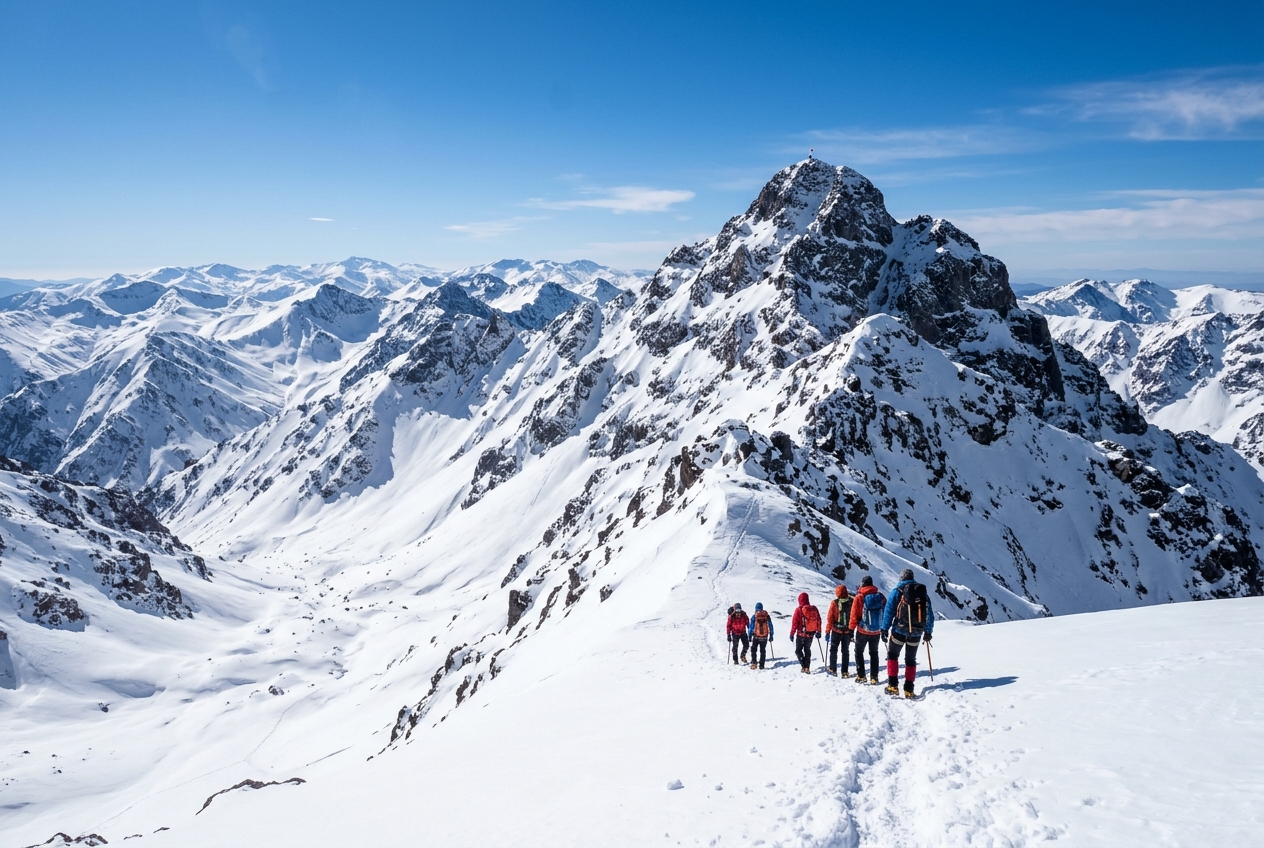 Photo: Anasserrihani · CC BY-SA 4.0
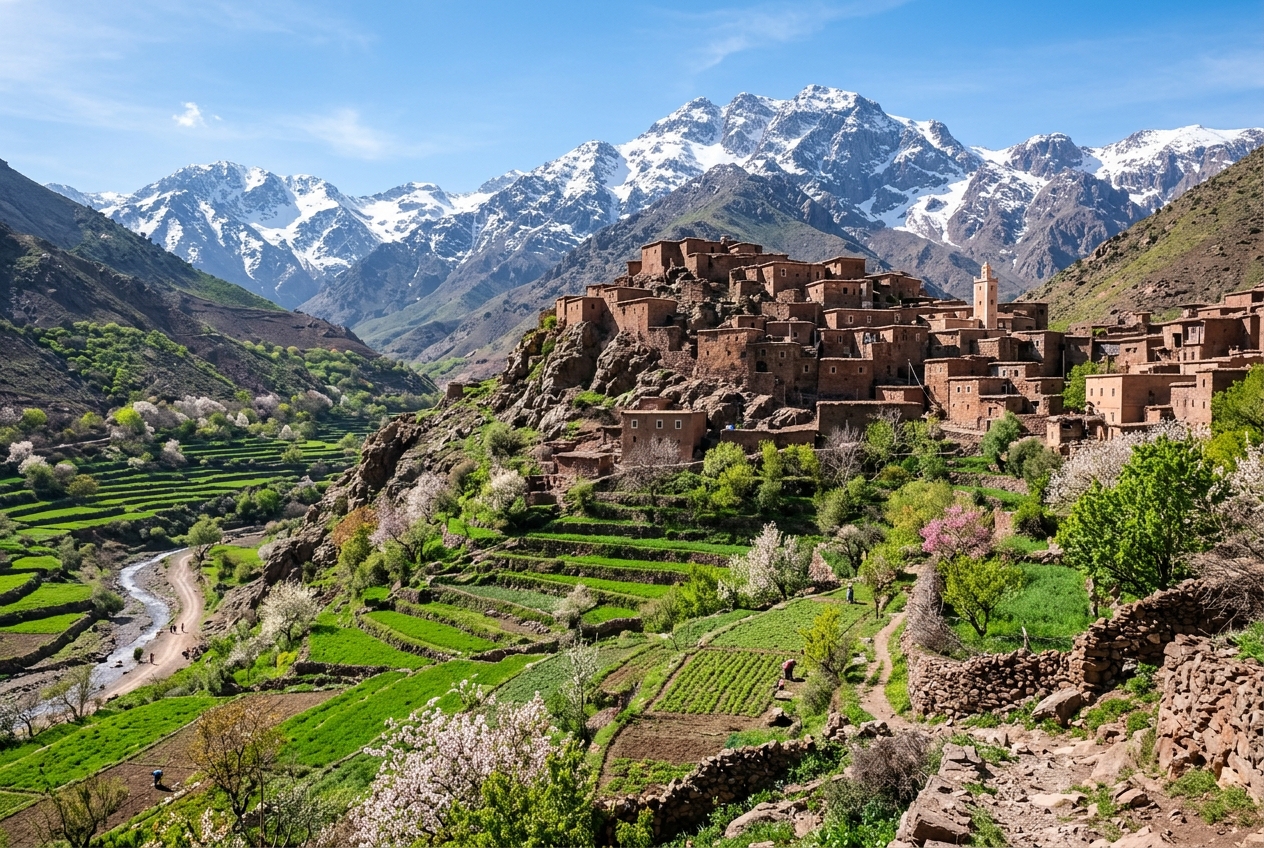 Photo: Mounir Neddi · CC BY-SA 4.0
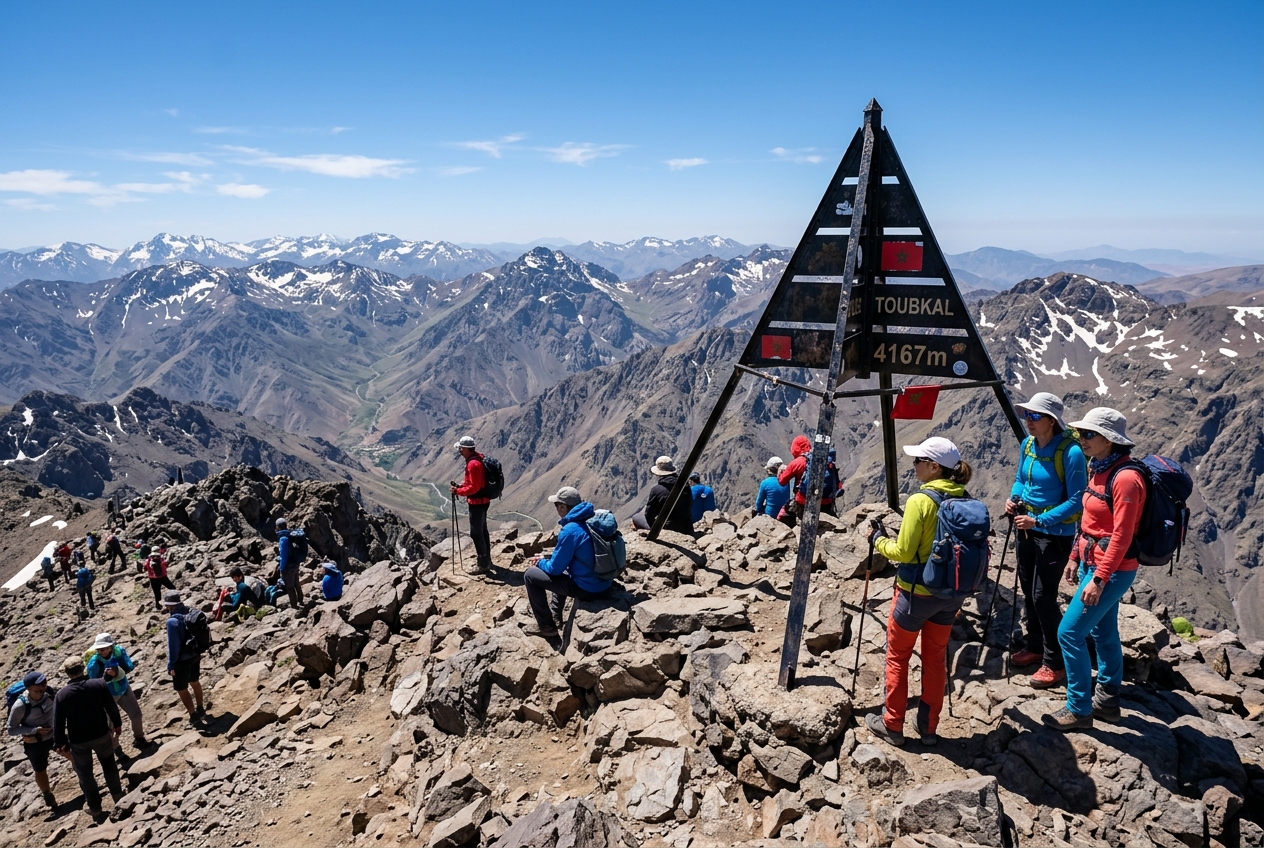 Photo: Buckerfing · CC BY-SA 4.0
The year on the mountain
Temperatures are typical values for a normal year — Imlil daytime highs and refuge night lows — and the snow line is where lasting snow usually begins. Individual years differ; the guide reads the week, not the calendar.
Two climates, twenty degrees apart
The gap between the valley by day and the refuge by night is 15–20 °C in every month: a July afternoon in Imlil is 30 °C, the same night at 3,207 m is 5 °C, and the summit at dawn is close to freezing. Pack for both, whatever the month.
January
Deep winter on the mountain, mild days in Imlil. The valleys are quiet and clear between storms.
Runs: Day hikes · valley treks on most days · Toubkal as a winter climb
Watch: Storms close the passes for days; short daylight; cold village nights.
February
The snowiest month on average. Blue-sky days with white peaks make it the best month for winter photography.
Runs: Day hikes · valley treks on most days · Toubkal as a winter climb
Watch: Avalanche risk on the Ikhibi Sud after heavy snow; the guide may wait a day.
March
Almond blossom in the lower valleys, snow above the shrine. A winter climb on Toubkal, spring in the villages.
Runs: Day hikes · valley treks · Toubkal with crampons
Watch: Rain in the valleys, snow on the cols; Tizi Mzik can need microspikes.
April
Green terraces, full rivers, blossom in Aroumd. The Toubkal cwm is still snow-filled; crampons until mid-May most years.
Runs: Day hikes · all valley treks · Toubkal with crampons
Watch: Snowmelt makes stream crossings awkward; the Setti Fatma and Oukaimeden cols open late in the month in a dry year.
May
The best valley month: waterfalls at full flow, long days, mild cols. Toubkal turns from winter to summer condition by mid-month.
Runs: Everything except Tizi Aguelzim and the Lac Ifni circuit (guide's call)
Watch: Old snow on north-facing cols; the refuge is busy around Moroccan holidays.
June
Summer begins. Every route in the programme runs; the high passes clear and the summit cwm dries out.
Runs: All 30 routes
Watch: Heat in the lower valleys by late morning; start early.
July
Hot in Imlil and the villages, pleasant above 2,500 m, clear summit mornings. The busiest month on the normal route.
Runs: All 30 routes, with dawn starts
Watch: Afternoon storms on the high cols; the Tamsoult falls shrink.
August
As July: hot valleys, good high ground, the refuge full. Moroccan holiday crowds on the Toubkal path.
Runs: All 30 routes, with dawn starts
Watch: Heat on the flood plain and the Tizi Mzik switchbacks; waterfalls at a trickle.
September
The second-best month of the year: stable, clear, cooler, quieter. Every pass open, the walnut harvest beginning.
Runs: All 30 routes
Watch: The first cold nights at the camps by late month.
October
The most settled weather of the year and the clearest air. First snow on the summit ridge in the last ten days most years.
Runs: All 30 routes until the first snowfall; high passes then on the guide's call
Watch: The Aguelzim and Lac Ifni circuits can close suddenly; the refuge nights turn cold.
November
Autumn in the valleys, winter on the mountain. Toubkal returns to crampons; the valley treks are at their quietest and best.
Runs: Day hikes · valley treks · Toubkal as a winter climb from mid-month
Watch: The high circuits are closed; daylight shortens quickly.
December
Cold, clear and short. Mild walking in Imlil, serious mountaineering above the refuge; the quietest month for everything except the holidays.
Runs: Day hikes · valley treks on most days · Toubkal as a winter climb
Watch: Storms, short days and a full refuge between Christmas and New Year.
The summit at dawn is colder than the refuge night in every month: around freezing in August, −15 °C or lower with wind in January.
What decides the season on each route
Three curves explain the whole calendar. The snow line decides which passes are open; precipitation decides when the rivers and waterfalls run; daylight decides how long a summit day can be.
The snow line against the passes
Read it left to right: Tizi Mzik (2,489 m) clears in March in most years, the 2,900 m cols in May, the refuge in May, Tizi Aguelzim and Tizi n'Ouanoums in June — and all of them close again between late October and November. Typical values; the guide reads the week.
Rain, snowmelt and daylight
Most of the year's precipitation falls between November and April, as snow above 2,500 m — which is why the rivers and waterfalls run highest from April to June, when it melts, and why July and August are dry below the storms. Daylight runs from about ten hours in December to fourteen in June: a summit day in winter has four fewer hours to work with.
Thirty routes, twelve months
Our routes fall into six families by the height of their highest pass, and the pass decides the season. A filled circle means the route runs as written; a half circle means it depends on the snow that week and the guide decides; an open circle means we do not run it.
Outer ring — the seasons
- Spring
- Summer
- Autumn
- Winter
Inner rings, from the outside in — route families
- 1Day hikes from Imlil
- 2Valley treks, passes under 2,500 m
- 3Valley treks with a 2,900–3,200 m col
- 4Toubkal by the normal route
- 5Toubkal via Tizi Aguelzim; Ouanoukrim
- 6Toubkal circuit via Lac Ifni
Colour of a segment
- Runs as written
- Guide's call
- Not run
The same information as a table, family by family:
| Route family | J | F | M | A | M | J | J | A | S | O | N | D |
|---|---|---|---|---|---|---|---|---|---|---|---|---|
| Day hikes from ImlilIsk, Tawdja, Tizi Mzik, Sidi Chamharouch, Tamsoult fallsTamsoult falls: Tizi Mzik only Dec–Feb | ● | ● | ● | ● | ● | ● | ● | ● | ● | ● | ● | ● |
| Valley treks, passes under 2,500 mAzzaden, Imenane, Three Valleys, Four Valleys, Aït OussadenDec–Feb: microspikes in reserve for Tizi Mzik | ◐ | ◐ | ● | ● | ● | ● | ● | ● | ● | ● | ● | ◐ |
| Valley treks with a 2,900–3,200 m colImlil–Setti Fatma, Oukaimeden routes, Adrar El Hadj, TzikertApr and Nov: open in a dry year, on the guide's call | ○ | ○ | ○ | ◐ | ● | ● | ● | ● | ● | ● | ◐ | ○ |
| Toubkal by the normal route2-, 3- and 4-day ascents via the refugeNov–Apr: winter climb with crampons and ice axe | ◐ | ◐ | ◐ | ◐ | ● | ● | ● | ● | ● | ● | ◐ | ◐ |
| Toubkal via Tizi Aguelzim; Ouanoukrim3-, 4- and 5-day loops through the Azzaden; the Ouanoukrim daysMay and late Oct: snow on the col decides | ○ | ○ | ○ | ○ | ◐ | ● | ● | ● | ● | ◐ | ○ | ○ |
| Toubkal circuit via Lac IfniThree passes above 3,100 m, two campsLate April possible in a dry year | ○ | ○ | ○ | ○ | ◐ | ● | ● | ● | ● | ◐ | ○ | ○ |
● Runs as written◐ Conditions decide — the guide's call○ Not run
Every trek page carries its own season line and its fallback. The full list: Atlas Mountains treks; help choosing: which Atlas trek is right for you.
Spring, summer, autumn, winter — on two mountains
The valley and the summit do not share a season. Each card gives the whole picture for its quarter: what it feels like, what it is good for, and the hard part we tell you about before you book.
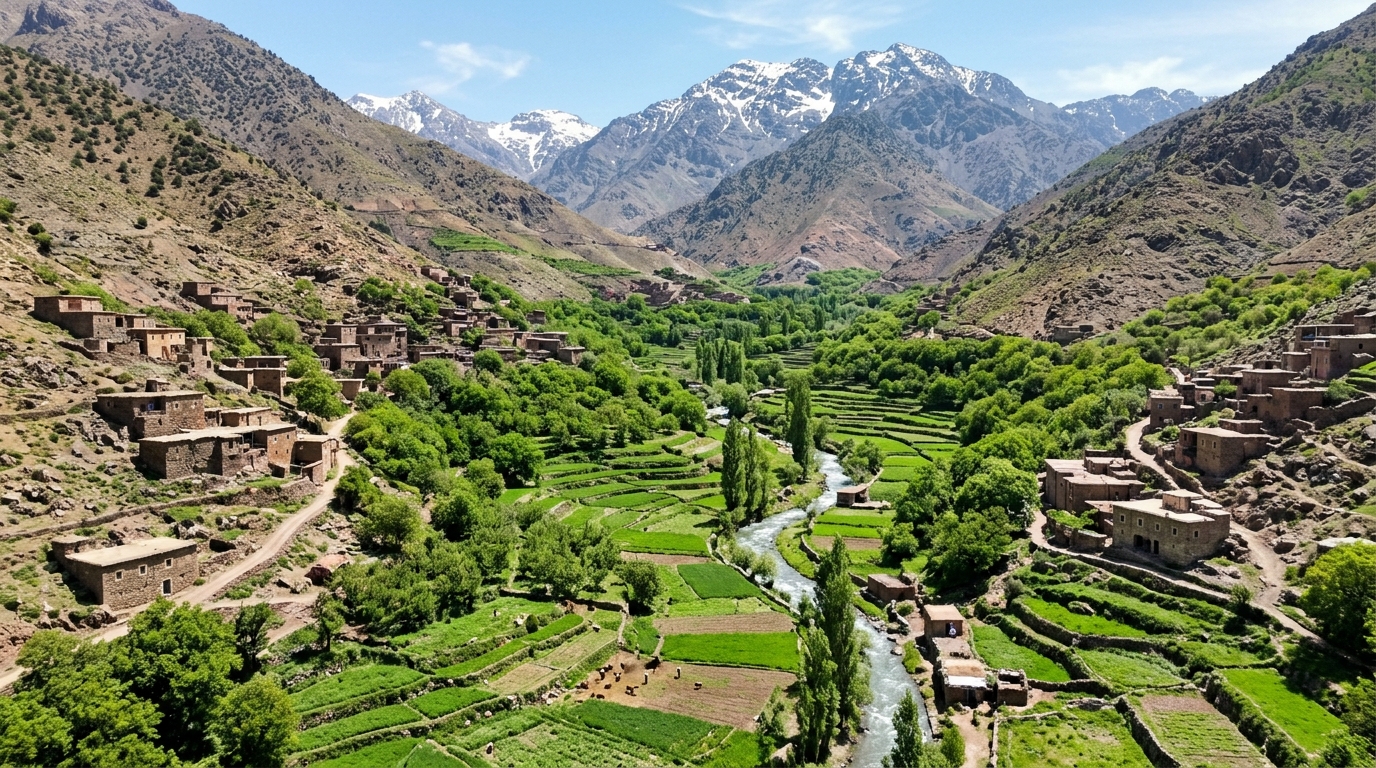 Photo: Luc Viatour / www.Lucnix.be · CC BY-SA 3.0
Spring
March – MayThe valleys at their best and the mountain in transition. Almond and then apple blossom climbs the terraces from March, the rivers run high with snowmelt, and the Tamsoult and Setti Fatma waterfalls are at their fullest from April. Days in Imlil are mild, nights in the villages cool. On Toubkal, snow fills the summit cwm until mid-May in most years, so the ascent stays a crampon climb until then — and a spring summit with white peaks and green valleys below is one of the finest things the massif offers.
Good for: Valley treks and day hikes; a Toubkal ascent with winter equipment until mid-May; families at Easter.
Hard part: Stream crossings in snowmelt; the high-pass routes still closed until late May; rain in the valleys in March and April.
Photo: Buckerfing · CC BY-SA 4.0Summer
June – AugustEvery route in the programme is open. The high passes — Tizi Aguelzim, Tizi n'Ouanoums, Tizi Likemt, the Oukaimeden cols — are snow-free, the refuge is in summer condition and the summit is a non-technical walk on scree. The price is heat in the lower valleys: Imlil reaches 30 °C by midday in July and August and the Tizi Mzik switchbacks and the Mizane flood plain are in full sun, which is why summer treks start at dawn. Above 2,500 m the days are pleasant and the nights cool; afternoon storms build on the high cols often enough that the early start is a safety rule, not a preference.
Good for: The circuits and high-pass loops; first-time summits in June; anyone who can only travel in school holidays.
Hard part: Heat on the valley days; the refuge and the normal route at their busiest; waterfalls reduced to a trickle by August.
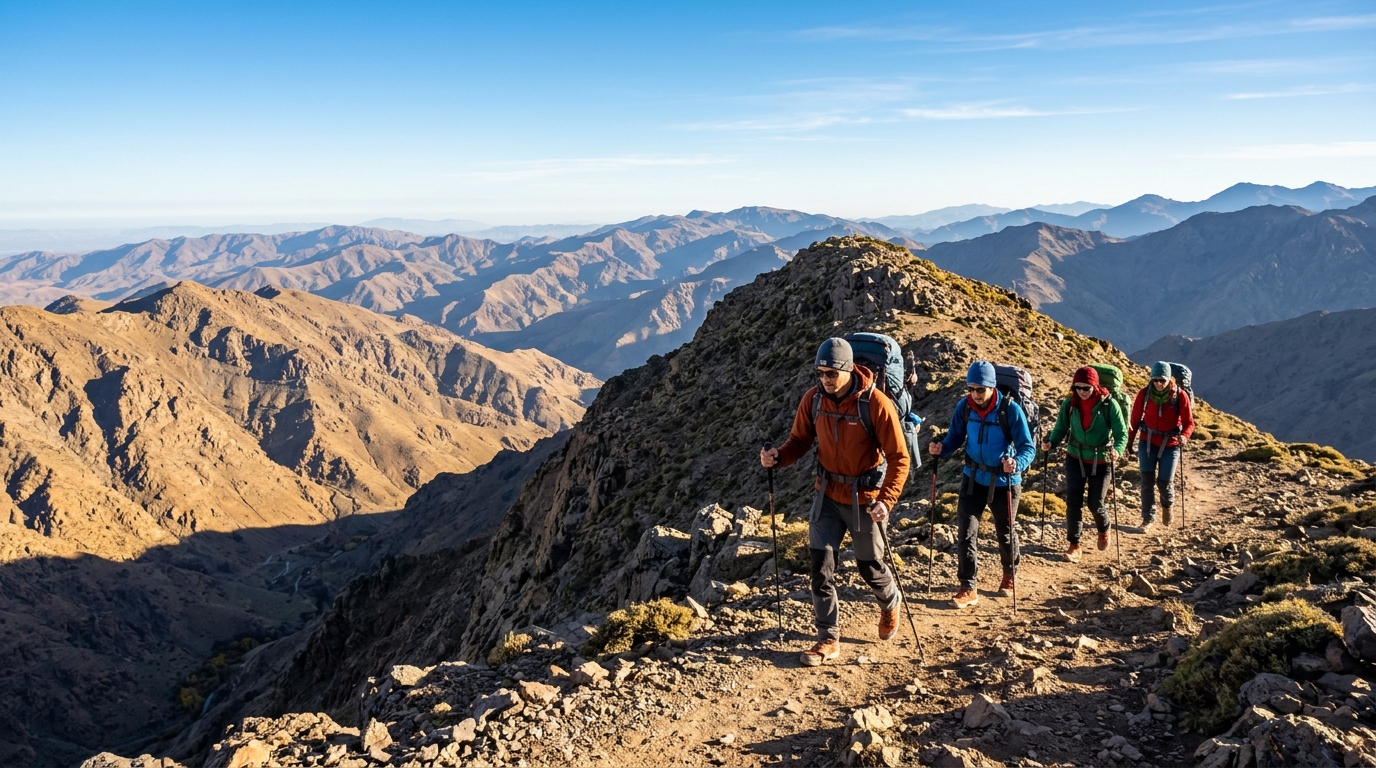 Photo: Kurinurm · CC BY-SA 4.0
Autumn
September – NovemberThe most settled weather of the year. September and October bring stable high pressure, the clearest air, cooler days and cold nights; the walnut harvest fills the villages; every pass is open until the first snowfall, which arrives on the summit ridge in the last ten days of October in most years. November is the hinge: autumn in the valleys, winter on the mountain, and the quietest month for the village treks.
Good for: Everything, with October the single best month for the summit and the high circuits; photographers; valley treks in November.
Hard part: A sudden early snowfall can close the Aguelzim and Lac Ifni circuits overnight; camp nights turn cold by October.
Photo: Anasserrihani · CC BY-SA 4.0Winter
December – FebruaryTwo climates. In Imlil and the villages, winter means cold nights, clear mild days and empty paths — the day hikes and the lower valley treks run on most days, with microspikes in reserve for Tizi Mzik. Above Sidi Chamharouch it is a different mountain: snow and ice from the refuge up, crampons and an ice axe on the summit cwm, instruction from the guide, and the real possibility of being turned back by a storm. Winter is the quietest season for everything except the week between Christmas and New Year, when the refuge fills.
Good for: Winter climbers; valley treks for the quiet and the snow-topped views; the Imlil walking break.
Hard part: Storms that close the passes for days; short daylight; avalanche risk on the Ikhibi Sud after heavy snow; cold village nights.
The winter rules: November through April
Two lists the Imlil office applies without exception. The first is for anyone climbing between November and April; the second explains what your trek becomes when snow or heat changes the day.
Winter climbs, November to April
- Crampons and an ice axe from the refugerented through us, fitted in Imlil, with instruction from the guide on the first snow
- B1-rated boots, gaiters, a warmer sleeping bagthe refuge is well below freezing at night
- The guide sets the turnaround timeand the group turns back together when the weather or the snow says so
- A day in handwinter bookings do better with a spare day in Imlil to wait out a storm
- The normal route onlythe Aguelzim, Ouanoukrim and Lac Ifni variants are not run between November and April
In detail: the Atlas in winter.
When conditions change the day
- Tizi Aguelzim closed by snowthe 3-, 4- and 5-day Azzaden loops climb Toubkal by the normal route from Imlil instead
- Tizi n'Tzikert or Tizi n'Ou Addi closedthe day becomes Tizi Mzik, or the Oukaimeden road is used; the overnight stops do not change
- Snow on Tizi Mzik after a stormmicrospikes, or the valley path; the guide decides in the morning
- Summit day in a stormthe group waits at the refuge or descends; the day is rebooked where dates allow
- Heat in the valleys in July–Augustdawn starts, long shaded lunches, the short village-to-village stages
The overnight stops and the price do not change when a fallback is used; the guide decides in the morning and tells you why.
The best month for what you want
If you can choose your dates, start from what you want the trek to be and read across.
- A first Toubkal summitJune, or September to mid-OctoberDry cwm, stable weather, long days, no crampons.
- Families with childrenApril–May and late September–OctoberMild cols, green or golden villages, no heat on the valley days.
- Waterfalls and riversApril to early JuneSnowmelt at full flow at Tamsoult and Setti Fatma.
- The high circuitsMid-June to early OctoberTizi Aguelzim, Lac Ifni and the Oukaimeden cols all open.
- PhotographsOctober–November, and FebruaryThe clearest air of the year; white peaks over green or bare valleys.
- Avoiding crowdsNovember, and January–FebruaryEmpty paths and quiet guesthouses; the summit as a winter climb only.
- A winter climbJanuary to MarchFull snow cover, crampons and ice axe, the summit earned.
- School-holiday datesJuly–AugustAll routes open; book early for the refuge and start at dawn.
If your dates are fixed, send them with your group size and we will say which routes are at their best that week — and which to avoid. Packing by season: what to pack for the Atlas.
Season questions
What is the best month to climb Mount Toubkal?
Can I trek in the Atlas in winter?
When are the high passes open?
How hot does it get in summer?
When are the waterfalls at their best?
Does it rain much?
Do treks run during Ramadan and the Eid holidays?
When should I book for October?
Tell us your dates, we'll tell you the mountain
Which pass is holding snow this week, whether the falls are running, how hot the flood plain will be at eleven. A guide from the Imlil office answers — usually the same day.
No deposit to talk, no pressure to book — just mountain answers.