
How to Prepare for Mount Toubkal: Physical Training & Gear
The complete preparation guide for climbing Mount Toubkal (4,167 m) — an 8-week cardio and hill conditioning plan, breaking in boots, mental endurance, and trail pacing.
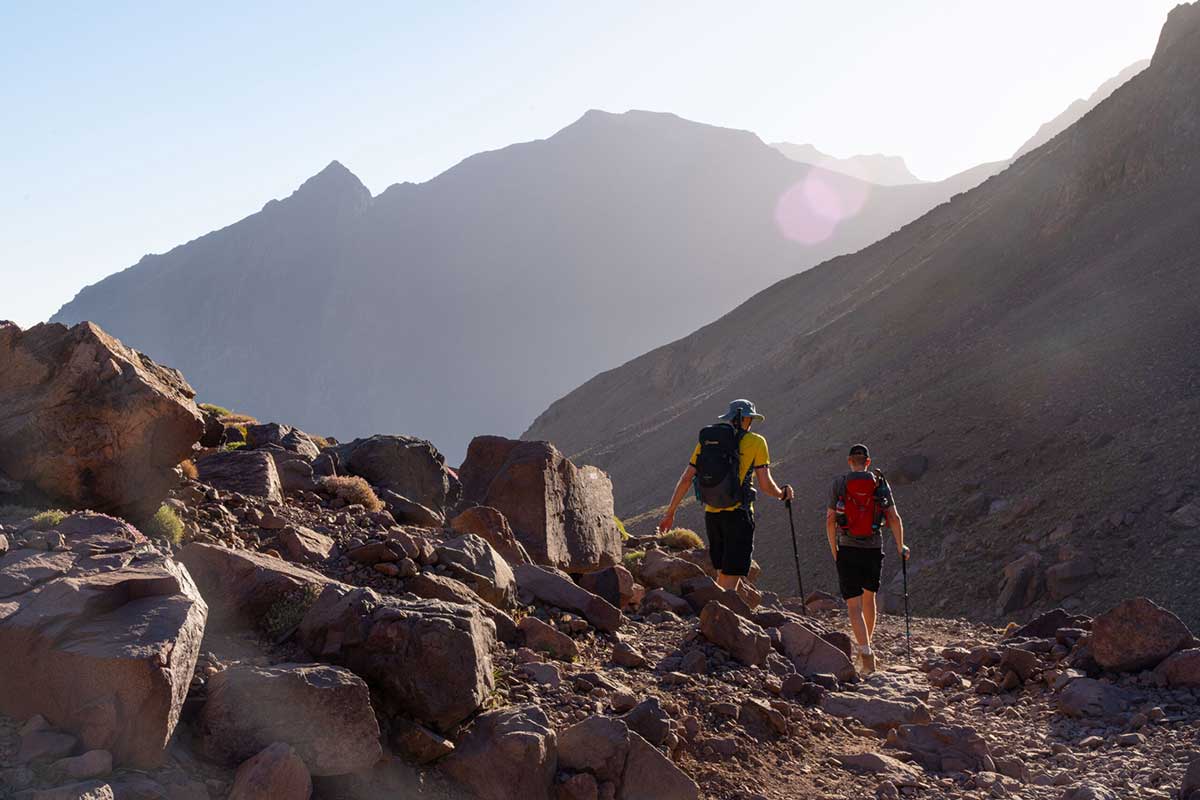
At 4,167 meters (13,671 feet), Mount Toubkal is the highest peak in North Africa and the Arab world. While Toubkal is not a technical rock climb during the summer and autumn months, it is a demanding, high-altitude mountain trek that should never be underestimated. The summit route climbs over 2,400 vertical meters from the Imlil trailhead, traversing rocky scree, steep switchbacks, and thin mountain air.
+2,427 m (Imlil to Summit)
+1,467 m (to Refuge)
+960 m (Refuge to Col & Peak)
6–8 Weeks Cardio & Hills
1. Understanding the Physical Demands of Toubkal
The standard Toubkal ascent is broken into two distinct phases, each testing different aspects of your physical fitness:
- Day 1 (Imlil to Refuges · 12 km · +1,467 m · 5–6 hours): A long, continuous uphill march starting at 1,740 m and terminating at 3,207 m. This day tests your aerobic stamina, core endurance, and calf/quad muscle resilience as you hike past Armed and the shrine of Sidi Chamharouch.
- Day 2 (Refuge to Summit & Full Descent · 16 km · +960 m / -2,427 m · 8–10 hours): The ultimate physical test. You awaken at 4:30 AM in the cold and tackle a steep 3 to 4-hour scree climb in sub-zero dawn winds above 3,500 m where oxygen levels drop to ~65% of sea level. After celebrating at the pyramid summit, you must reverse the entire route—descending 2,427 vertical meters all the way back to Imlil. This intense descent places immense repetitive strain on knees, quads, and toes.
2. The 8-Week Toubkal Training Blueprint
If you live at sea level without access to mountains, this structured 8-week regime builds the exact aerobic and eccentric muscular strength needed for Toubkal:
| Training Phase | Primary Focus | Weekly Activities & Volume | Mountain Readiness Goal |
|---|---|---|---|
| Weeks 1–2: Base Building | Cardiovascular base | 3x 30–45 min moderate cardio (jogging, cycling, swimming) + 2x basic bodyweight lunges and squats. | Build baseline aerobic lung capacity and wake up leg muscles. |
| Weeks 3–5: Incline & Stairs | Vertical resistance | 2x stair-master or stadium stairs (45–60 min) + 1x weekend outdoor hike (2–3 hours) with 5 kg daypack. | Condition glutes, quads, and calves for continuous uphill stepping. |
| Weeks 6–7: Peak Endurance | Trek simulation | 1x long weekend hike (4–6 hours, 600–1,000 m elevation gain) wearing boots and carrying 7–8 kg pack + 2x HIIT sessions. | Simulate Day 1 trail demands; test footwear and gear under load. |
| Week 8: Tapering | Rest & recovery | 2x light 30 min brisk walks or gentle cycling. Stretch thoroughly, hydrate, and rest. | Arrive in Morocco fresh, injury-free, and energized. |
If you don’t have hills nearby, use a gym StairMaster or public building stairs. Climbing 50–80 flights of stairs 2 to 3 times per week with a small weighted backpack directly replicates the biomechanics of ascending the South Cwm scree slope on Toubkal.
3. Footwear: Breaking In Your Boots
Footwear failure is the single most common reason trekkers struggle on Toubkal. The upper scree slopes above 3,500 m consist of loose, sharp shale and shifting scree.
- Choose Mid-to-High Ankle Support: Low-cut trail running shoes allow scree and pebbles to enter your shoes and offer zero lateral ankle protection if you slip on scree. Sturdy 3-season or 4-season boots with a Vibram sole are strongly recommended.
- Never Wear Brand-New Boots: Wear your trekking boots for at least 30–40 hours on long walks prior to your trip to mold the leather and footbeds to your feet.
- Merino Wool Socks: Wear medium-cushion merino wool socks (such as Darn Tough or Smartwool) to reduce friction and regulate moisture. Bring blister prevention tape (Compeed or Leukotape) in your daypack.
4. Mental Conditioning & Trail Pacing
Many athletic runners struggle on Toubkal because they start too fast. In the High Atlas, our Berber guides live by the adage “shwiya b’shwiya” (step by step, slowly and steadily).
When climbing above 3,000 meters, your body’s cardiovascular system works twice as hard to deliver oxygen to your working muscles. By maintaining a steady, rhythmic cadence where you can converse comfortably without gasping, you conserve glycogen and allow your respiratory system to adapt to the decreasing oxygen pressure.
If you have any doubts about your stamina or susceptibility to altitude, consider choosing our 3-Day Toubkal Ascent via Azzaden Valley instead of the rapid 2-day push. The 3-day route includes an overnight stay at 1,850 m in the Berber village of Tizi Oussem and crosses the Aguelzim pass (3,650 m) before the summit day, resulting in a 98% summit success rate.
5. Explore Companion Toubkal Guides
Continue your preparation by reading our authoritative satellite guides:
- Altitude Sickness on Toubkal: Symptoms, Prevention & Acclimatization
- High Atlas Trekking Packing List: Summer vs Winter
- Toubkal Mountain Refuges Guide: Bunks, Food & Facilities (3,207 m)
- The Complete Imlil Travel Guide & Trailhead Logistics
6. Toubkal Preparation FAQs
Can a complete beginner climb Mount Toubkal?
Yes, provided you have good baseline fitness, determination, and proper footwear. Toubkal does not require ropes or technical climbing skills in summer. However, you must be capable of walking 6 to 8 hours uphill and managing steep, loose scree on the descent.
Do I need trekking poles?
Trekking poles are strongly recommended. They reduce impact on knee joints by up to 25% during the 2,400 m descent and provide crucial balance on the shifting scree of the South Cwm.
How heavy will my backpack be on the trek?
On all Imlil Trek tours, pack mules carry your main duffel bag (up to 15 kg). You only carry a light daypack (25–30 L) containing water (2–3 L), warm layers, waterproof jacket, camera, and personal snacks (approx. 4–6 kg total).
Treks this guide helps you plan
Planning Your High Atlas Trek?
All Imlil Trek itineraries are 100% private and all-inclusive: Certified local Mountain Guides, private door-to-door Marrakech riad transfers, all meals, and pack mule support.