

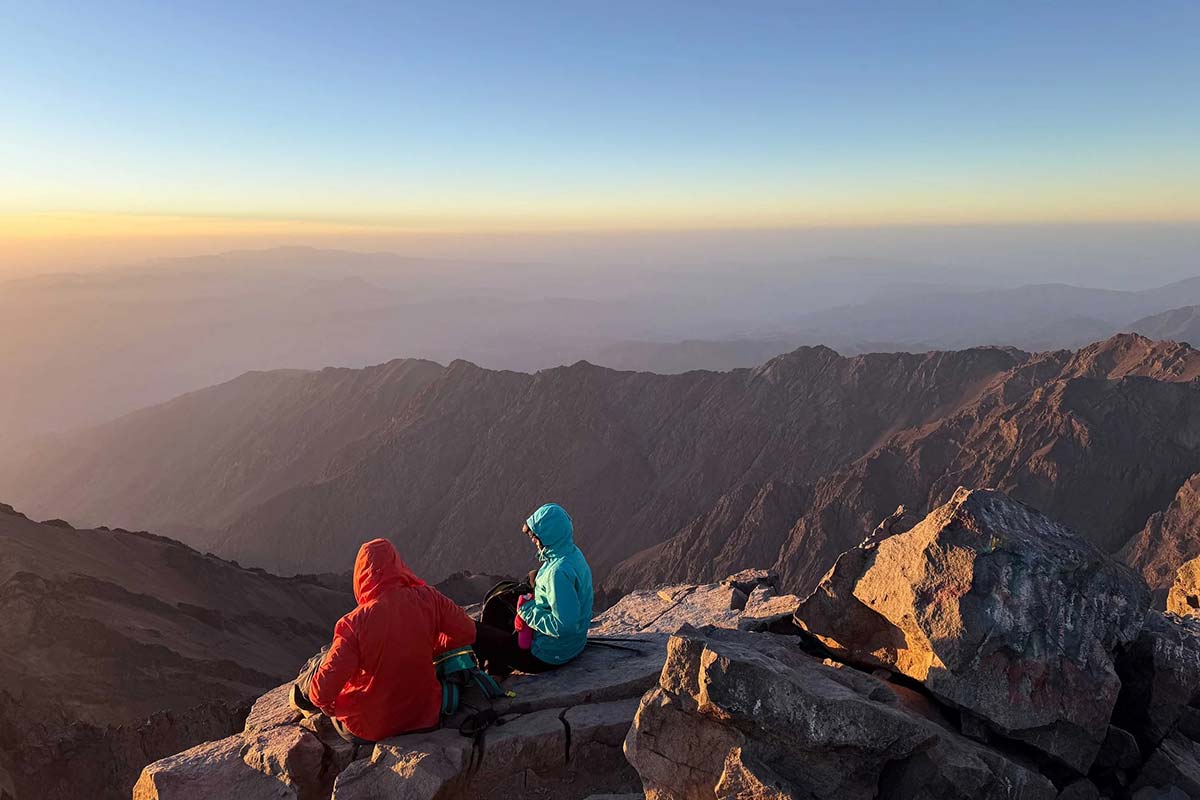
Altitude sickness (Acute Mountain Sickness / AMS) is the most common health concern on Mount Toubkal (4,167 m). It occurs when your body cannot adapt quickly enough to the reduced oxygen at altitude — at the summit, you’re breathing roughly 60% of the oxygen available at sea level. AMS risk typically begins above 2,500 m, meaning the entire section from the Toubkal Refuge (3,207 m) to the summit is within the risk zone. The good news: with proper prevention, route selection, and an experienced guide, AMS on Toubkal is manageable and largely preventable.
Altitude on Toubkal — The Numbers
| Imlil (start) | 1,740 m |
| AMS risk begins | 2,500 m |
| Toubkal Refuge | 3,207 m |
| Ouanoukrim (accl.) | 4,089 m |
| Toubkal Summit | 4,167 m |
| Oxygen at summit | ~60% |
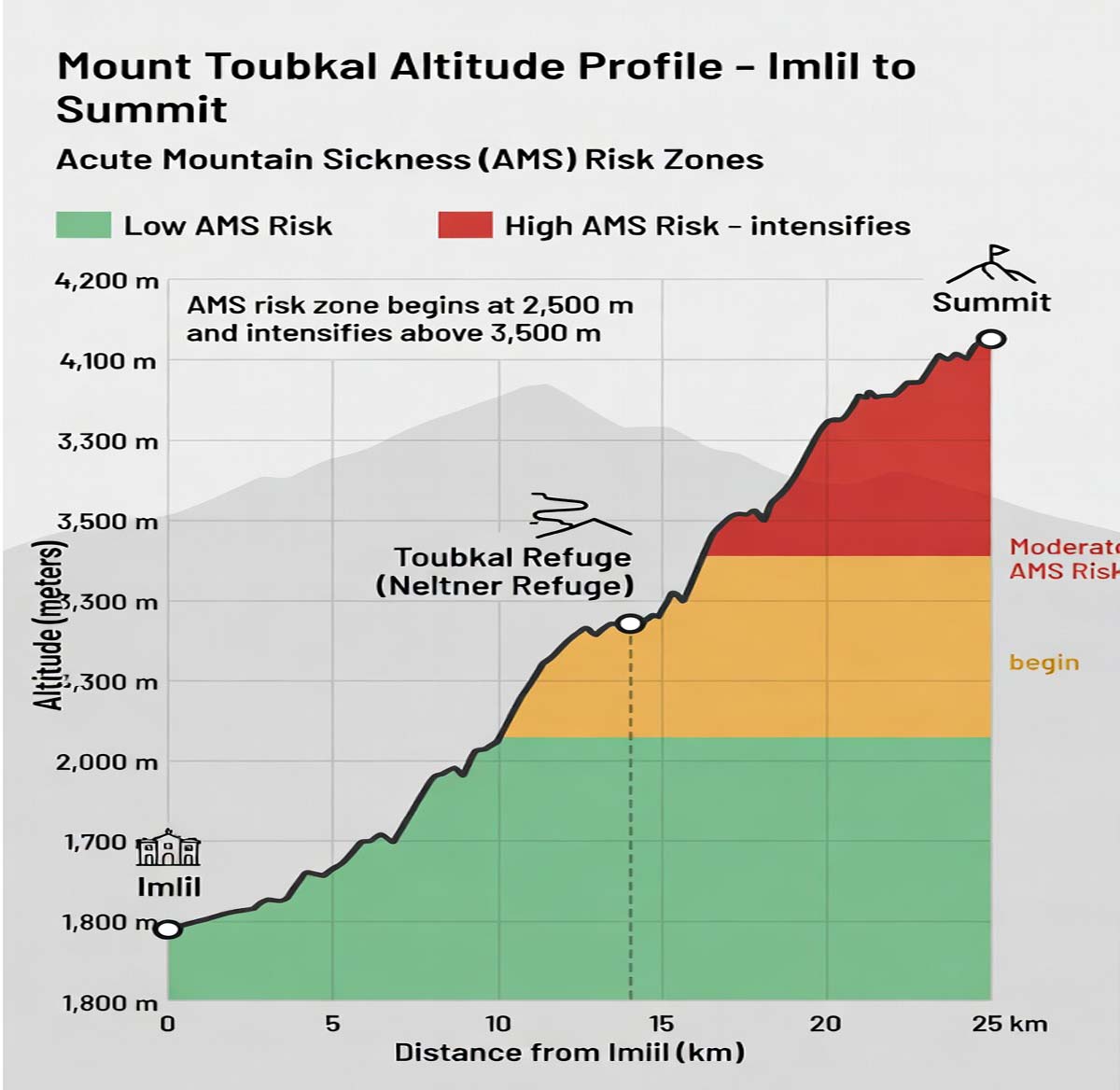
Your body gains 2,430 m of altitude between Imlil and the summit. On the 2-day route, this happens in roughly 24 hours — rapid by altitude medicine standards. On the 4-day route, your body has 72 hours and an entire day above 4,000 m to adapt. This is why route choice matters more than fitness for altitude safety.
Recognizing the Symptoms
AMS symptoms typically appear 6–12 hours after reaching an altitude above 2,500 m. On Toubkal, most trekkers first notice symptoms at the refuge (3,207 m) or during the summit push. Symptoms fall into three severity levels:
Mild AMS — Common, Manageable
- Headache — dull, persistent, responds to paracetamol/ibuprofen
- Mild nausea — reduced appetite
- Fatigue — feeling more tired than the effort warrants
- Disturbed sleep — difficulty falling asleep, frequent waking
- Mild dizziness — brief lightheadedness when standing
Most trekkers experience at least one of these at the refuge. Mild AMS is your body’s normal adjustment signal — not a reason to panic, but a reason to hydrate, slow down, and tell your guide.
Moderate AMS — Take Seriously
- Persistent headache — does not improve with rest or medication
- Nausea with vomiting
- Extreme fatigue — difficulty continuing at any pace
- Shortness of breath — at rest, not just while walking
- Reduced coordination — stumbling, difficulty with balance
Moderate AMS requires action. Your guide will stop the ascent, assess conditions, and likely begin descent. Continuing upward with moderate symptoms can lead to severe AMS.
Severe AMS — Medical Emergency
- Inability to walk straight (ataxia) — the clearest danger sign
- Confusion or altered consciousness
- Severe shortness of breath at rest
- Persistent vomiting
- Bluish discoloration of lips or fingernails (cyanosis)
Severe AMS can progress to HACE (High Altitude Cerebral Edema) or HAPE (High Altitude Pulmonary Edema) — both life-threatening. Immediate descent is the only effective treatment. This is extremely rare on Toubkal, but your guide is trained to recognize and act.
Key principle: Altitude sickness is not related to fitness. Very fit people can be affected; less-fit people may be fine. Previous altitude experience does not guarantee immunity on a future trip. The only reliable prevention is proper acclimatization and pacing.
Prevention — What Actually Works
1. Choose the Right Route — The Single Most Important Decision
The 4-day route with Ouanoukrim acclimatization is the most effective AMS prevention strategy. Day 2 takes you to Ouanoukrim (4,089 m) — actually higher than Toubkal’s refuge — then you sleep back at 3,207 m. This textbook “climb high, sleep low” approach gives your body an entire day above 4,000 m before the Toubkal summit push. The result: dramatically reduced AMS risk on summit day.
The 2-day route provides only one night at the refuge before the summit — minimal acclimatization. The 3-day Azzaden route is better — crossing the Aguelzim Pass (3,560 m) before the refuge provides some natural acclimatization.
For a full route comparison, read: Imlil to Toubkal — Which Route Should You Choose?
2. Hydrate Aggressively
Drink 3–4 liters of water per day from the moment you start trekking. Dehydration worsens AMS symptoms and is easy to underestimate at altitude (dry air, increased breathing rate). Your guide will remind you to drink at every rest stop. Avoid alcohol the night before and during the trek — it dehydrates you and impairs acclimatization.
3. Pace Yourself — Listen to Your Guide
Your CFAMM-certified guide sets a deliberately slow, steady pace — especially above 3,000 m. This feels frustratingly slow to fit trekkers, but it’s intentional. Rapid ascent is the primary trigger for AMS. Trust the pace; it’s set for altitude, not fitness. On summit day, the guide monitors group speed even more carefully.
4. Eat Well — Especially the Night Before
Your body burns significantly more calories at altitude. Eat a full dinner at the refuge and breakfast before the summit push. High-carbohydrate foods (bread, pasta, rice) are particularly effective. Avoid heavy, fatty foods that are hard to digest. Snack regularly during the trek — energy bars, dried fruit, nuts.
What about Diamox (Acetazolamide)? Some trekkers use Diamox to prevent AMS. It works by increasing breathing rate and urination, which accelerates acclimatization. Consult your doctor before the trek if you’re considering it — it requires a prescription in most countries and has side effects (tingling in hands/feet, increased urination, altered taste). We do not recommend self-medicating without medical advice. Your guide does not carry or administer Diamox.
What Your CFAMM Guide Does
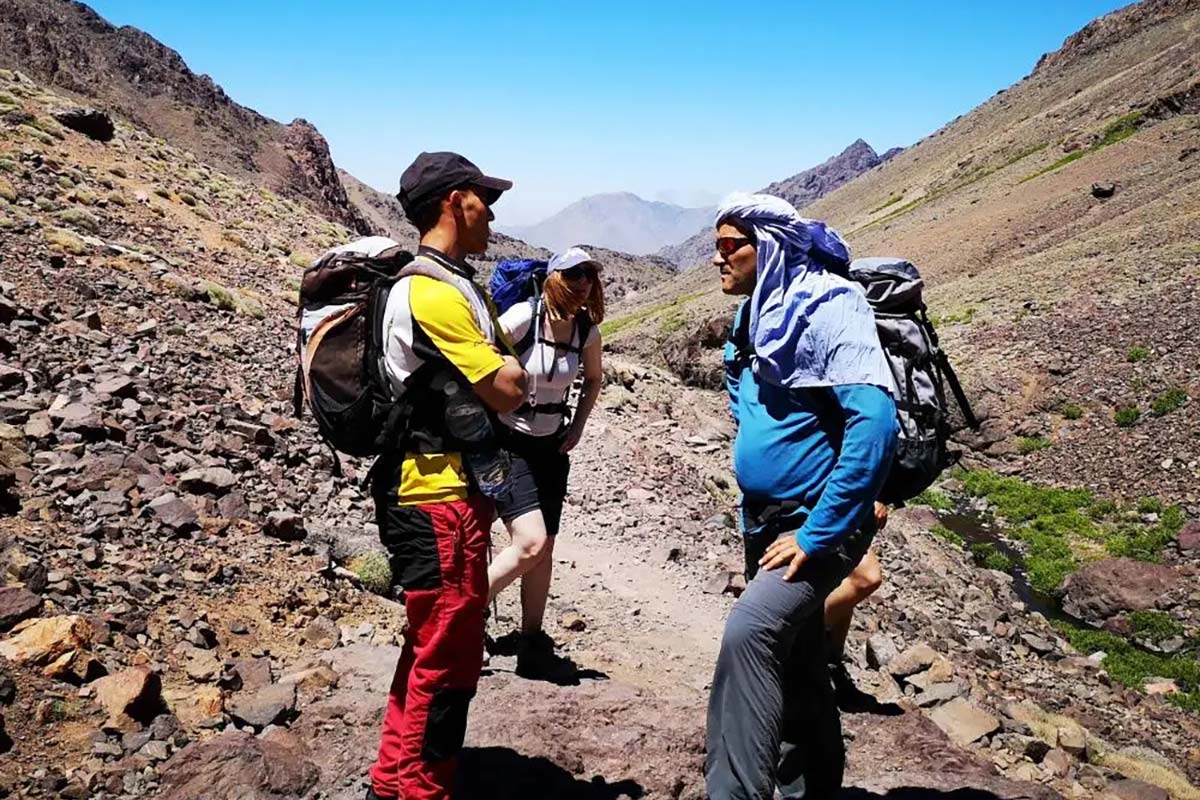
This is what sets a guided Toubkal trek apart from a DIY approach. All Imlil Trek guides are CFAMM-certified (Centre de Formation aux Métiers de la Montagne) with specific training in altitude safety. Here’s what happens at each stage:
Imlil → Refuge (Day 1)
- Sets a deliberately slow pace — especially above Sidi Chamharouch (2,310 m)
- Enforces regular hydration stops — every 45–60 minutes
- Observes each trekker for early symptoms (headache, unusual fatigue, pallor)
- At the refuge: checks in with each trekker individually, asks about headache, appetite, sleep quality
Acclimatization Day — Ouanoukrim (Day 2 on 4-day route)
- Guides the group to Ouanoukrim (4,089 m) — higher than the summit push
- Monitors how each trekker responds at 4,000+ m — this is a real-time altitude test
- Identifies anyone who might struggle on Toubkal summit day
- Adjusts next day’s plan based on observed responses (pace, start time, summit decision)
Summit Day
- Continuously monitors the group, especially in the final 500 m (above 3,700 m)
- Watches for coordination problems, confusion, extreme fatigue — the signs of moderate-to-severe AMS
- If a trekker shows moderate symptoms: stops the ascent for that individual, assesses, and begins descent if symptoms don’t improve within 15–20 minutes
- If severe symptoms appear: immediate descent — the guide may split the group, sending the affected trekker down with an assistant while continuing with the rest
- Carries first aid kit and emergency communication
The guide’s decision is final. If your guide decides you should not continue to the summit, or that the group should descend, that decision is non-negotiable. It is made based on years of training and daily experience at altitude. We have turned trekkers around 200 m below the summit because the signs were clear. Every one of them has thanked us afterward. The summit will always be there — your health cannot be compromised.
Why Route Choice Matters More Than Fitness
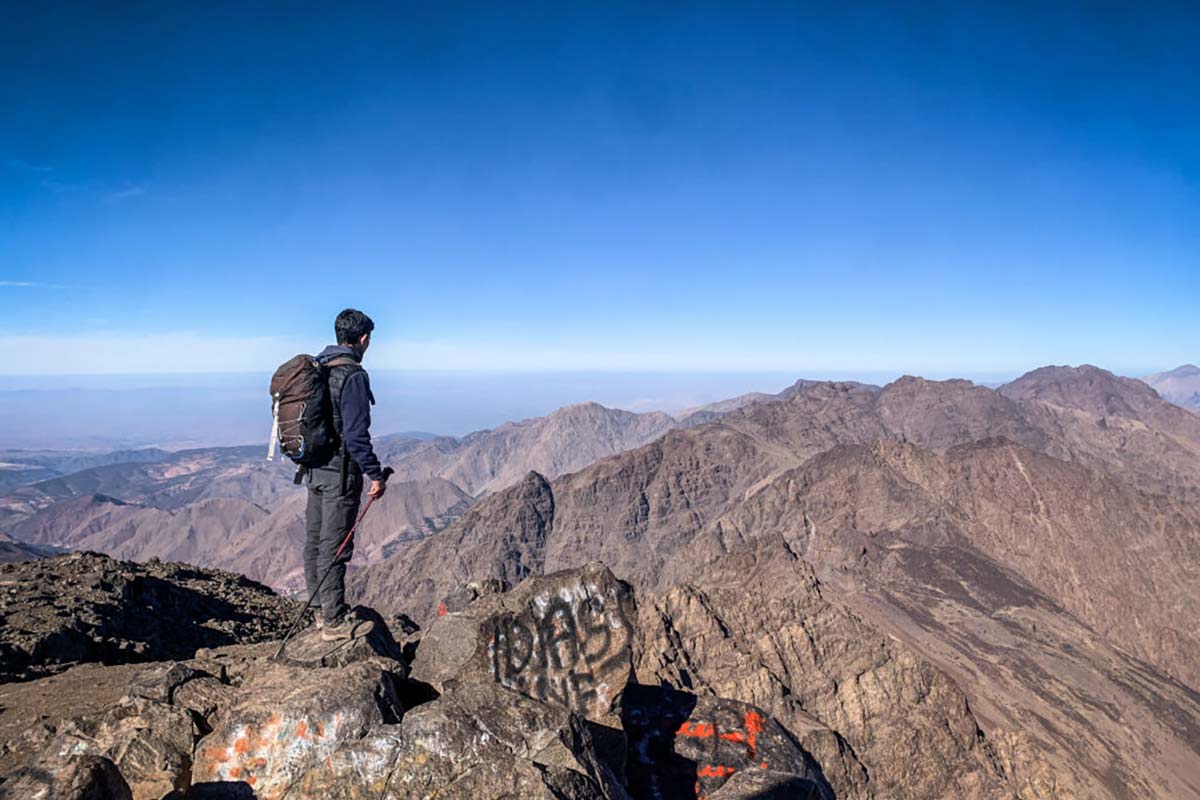
The most common mistake we see: fit, experienced hikers choose the 2-day route because they assume their fitness protects them. It doesn’t. AMS is a physiological response to reduced oxygen — your cardiovascular fitness doesn’t change how quickly your red blood cells adapt to altitude. What does change the equation is time at altitude.
The 4-day route gives your body three things the 2-day route cannot: two nights at 3,207 m (vs. one), an entire day above 4,000 m on Ouanoukrim, and a separate descent day (so summit day is shorter and less exhausting). The result: you arrive on Toubkal summit day with your body already adapted to the altitude — not fighting it.
For a full route comparison, read: Imlil to Toubkal — Which Route Should You Choose?
Frequently Asked Questions (FAQ)
Mild symptoms (headache, fatigue, disturbed sleep) are common — most trekkers experience at least one at the refuge. Moderate AMS is less common, especially with the 4-day route. Severe AMS is rare on Toubkal.
No. AMS is a physiological response to reduced oxygen — fitness does not predict susceptibility. Very fit athletes can be severely affected; less-fit trekkers may have no symptoms. Proper acclimatization is the only reliable protection.
The 4-day route with Ouanoukrim acclimatization. It provides two nights at the refuge + a day at 4,089 m before the summit. The extended 6-day routes offer even better progressive acclimatization.
Consult your doctor before the trek. Diamox (Acetazolamide) can help prevent AMS but requires a prescription and has side effects. It is not a substitute for proper acclimatization. We do not carry or administer it.
Your guide will stop your ascent, assess your symptoms, and begin descent if they don’t improve. On the 4-day route, you have the option to rest and attempt the summit the next day. On the 2-day route, there is no contingency — you descend.
It depends on the severity. Mild symptoms that resolve with descent: potentially yes, with your guide’s assessment. Moderate or severe symptoms: no — the trek is over. This is another reason the 4-day route is safer — it has built-in contingency days.
3–4 liters per day from the start of the trek. More in summer and at higher exertion. Mineral water is provided on all Imlil Trek tours — carry 1.5–2L capacity in your daypack. Read our packing guide for details.
Cold temperatures exacerbate the effects of altitude — your body works harder to stay warm, leaving less energy for acclimatization. This is why the 4-day route is even more important in winter.
Continue Reading
- Mount Toubkal Climbing Guide (2026)
- Imlil to Toubkal — Which Route Should You Choose?
- Toubkal Refuge — What to Expect at Base Camp
- Ouanoukrim — Morocco’s Second Highest Peak
- Toubkal in Winter — What You Need to Know
- What to Pack for an Atlas Trek
- Best Time to Trek in the Atlas Mountains
- Imlil Travel Guide
Altitude Safety Starts with Route Choice
The 4-day route with Ouanoukrim acclimatization gives you the best chance of reaching the summit feeling strong — not just surviving.
