

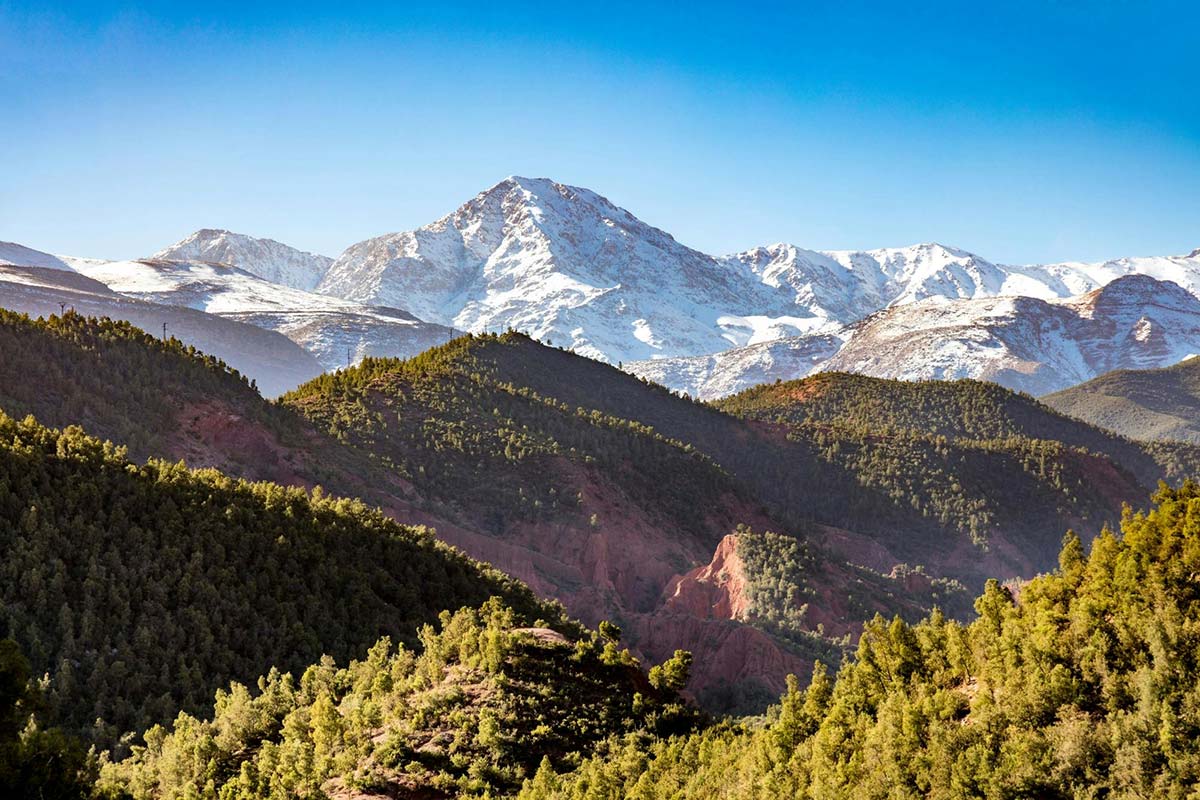
The Atlas Mountains stretch over 2,500 km across Morocco, Algeria, and Tunisia — but the section that draws trekkers from around the world is the High Atlas of Morocco, home to Jebel Toubkal (4,167 m), North Africa’s highest peak. Just 70 km south of Marrakech, the High Atlas offers everything from gentle valley walks through Berber villages to serious alpine ascents — all accessible in a single day from the city.
The Three Ranges
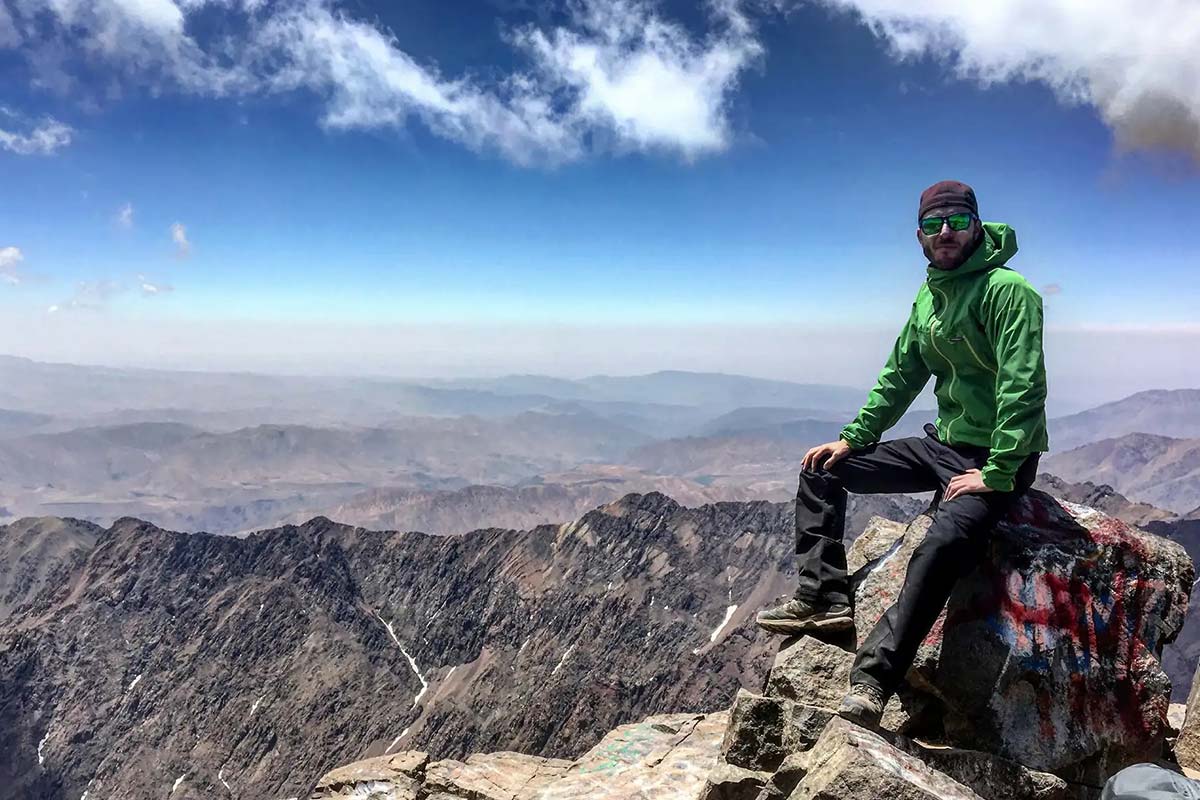
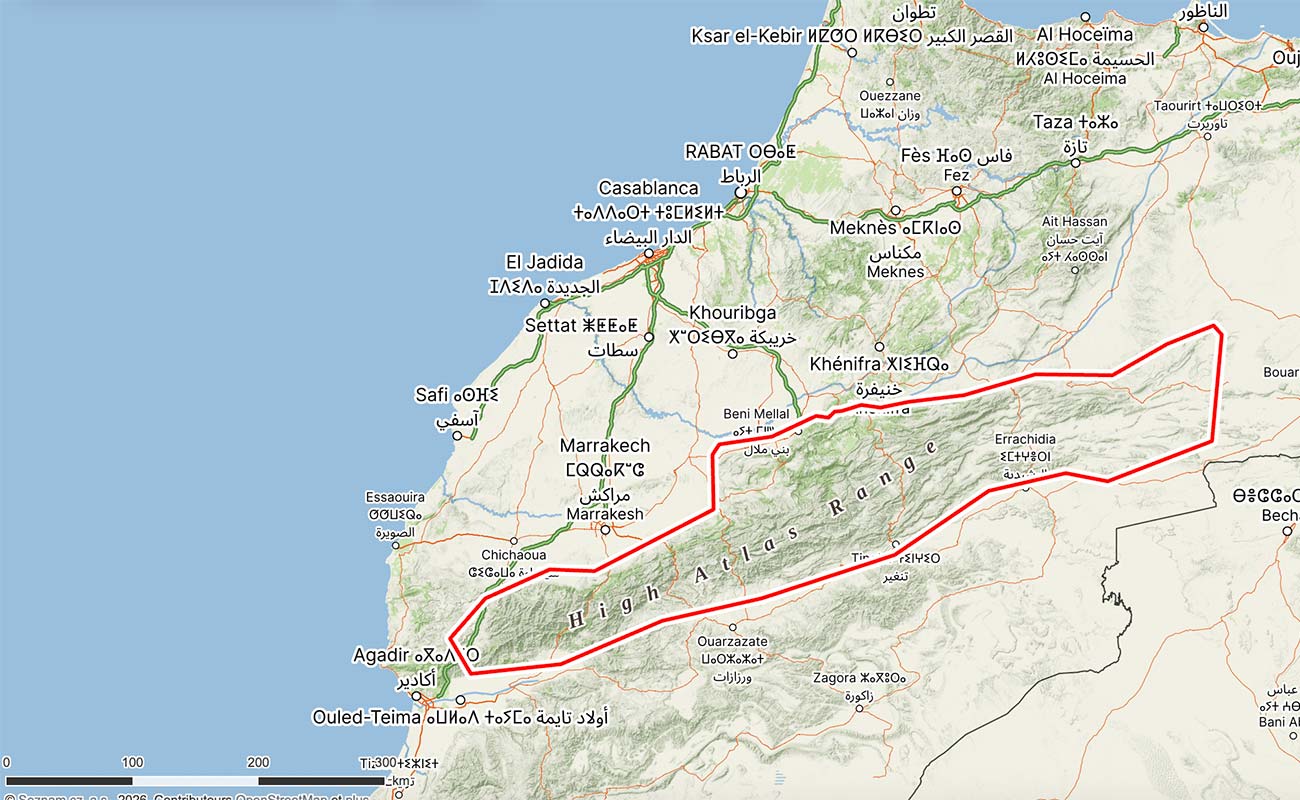
The Atlas Mountains in Morocco are divided into three distinct ranges, each with its own character:
High Atlas (Grand Atlas)
- The trekking heartland — home to Jebel Toubkal (4,167 m) and seven peaks above 4,000 m
- Location: Central Morocco, running east–west for ~500 km. The western section (around Imlil) is the main trekking zone
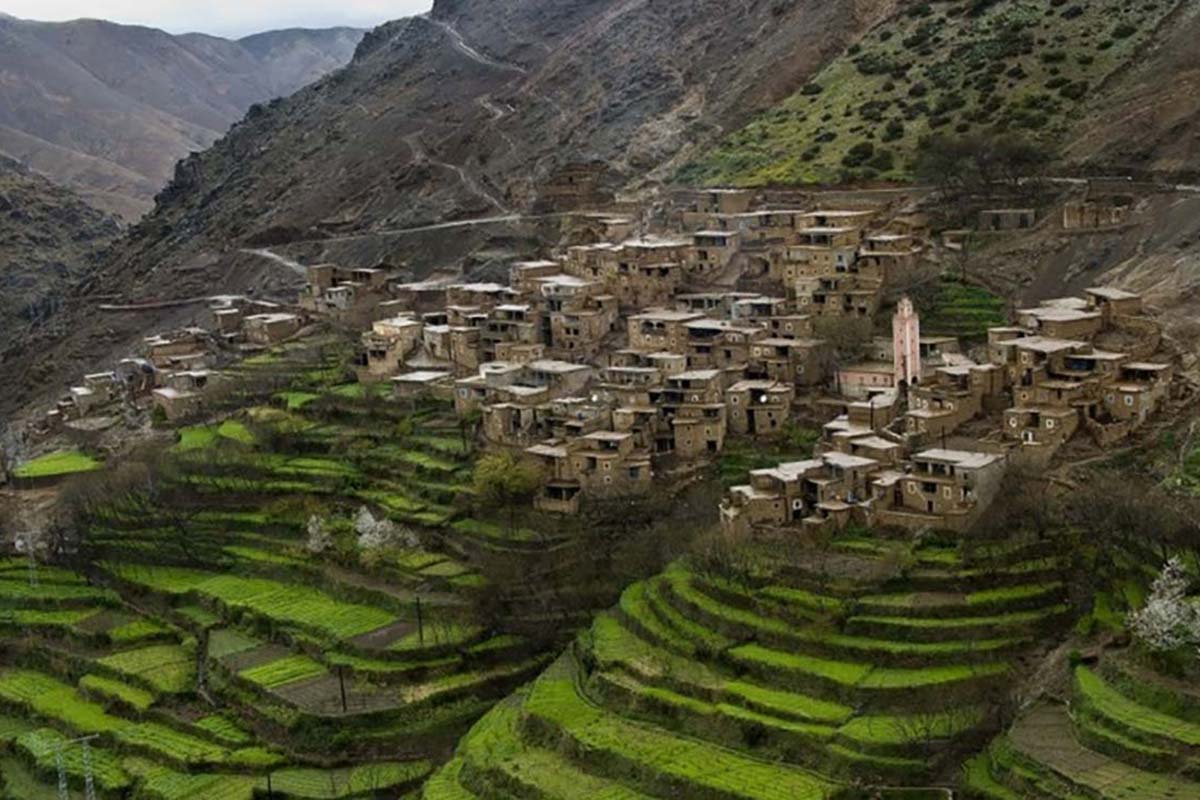
- Landscape: Dramatic peaks, deep valleys (Ait Mizane, Azzaden, Imenane), juniper forests, alpine lakes (Lake Ifni), and terraced Berber villages
- Elevation: Villages at 1,500–2,000 m, passes at 2,500–3,700 m, summits at 4,000+ m
- Access: 70 km / 90 minutes from Marrakech to Imlil — the main gateway
- Season: Year-round trekking. Best: April–May and September–October. Winter: crampons required
This is where we operate. All Imlil Trek routes are in the western High Atlas, within the Toubkal National Park.
Middle Atlas (Moyen Atlas)
- Rolling hills and cedar forests — lower, gentler terrain than the High Atlas
- Location: Northern Morocco, between Fes and Marrakech
- Highlights: Cedar forests of Azrou (home to Barbary macaques), Ouzoud Waterfalls, Ifrane (“Morocco’s Switzerland”), Bin el Ouidane lake
- Elevation: Generally 1,500–2,500 m. Highest peak: Jebel Bou Naceur (3,340 m)
- Best for: Easier hikes, nature watching, birdlife, and family-friendly day trips
Anti-Atlas
- Desert mountains — dry, rocky, and starkly beautiful
- Location: Southern Morocco, transitioning to the Sahara
- Highlights: Jebel Siroua (3,305 m), Jebel Saghro, Tafraoute and its painted rocks, ancient granaries, Aït Benhaddou (UNESCO World Heritage)
- Elevation: Generally 1,500–3,300 m
- Best for: Desert trekking, photography, geological landscapes, and winter hiking (when the High Atlas is snow-covered)
The Toubkal Region — Where We Trek
The western High Atlas around Imlil is the most popular trekking region in Morocco — and for good reason. The Toubkal National Park (established 1942, 380 km²) contains North Africa’s highest peaks, the most accessible trailheads, and a living Berber culture that hasn’t been diluted by mass tourism.
Why the Toubkal Region?
- Proximity: 90 minutes from Marrakech to Imlil. You can be on a mountain trail before lunch
- Variety: Day hikes, 2-day summit pushes, 3-day valley routes, and 6-day circuits — all from one base village
- Infrastructure: Established trails, refuges, guesthouses, equipment rental, and CFAMM-certified guides
- Peaks: Seven summits above 4,000 m including Toubkal and Ouanoukrim
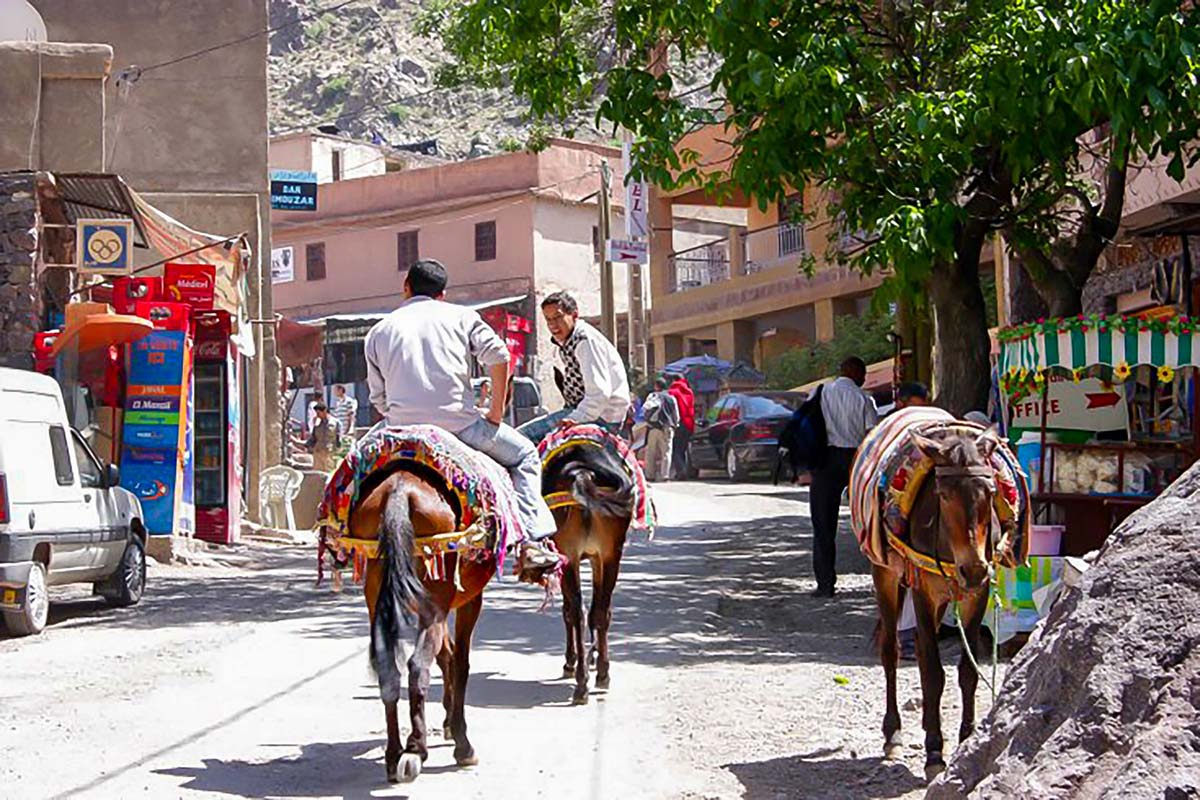
- Culture: Authentic Berber villages on every route — guesthouses, shared meals, traditional crafts
- Value: Outstanding value compared to European mountain destinations
The Best Treks from Imlil
All Imlil Trek routes operate within the Toubkal National Park. For a detailed route comparison, read: Imlil to Toubkal — Which Route Should You Choose?
Summit Treks
- 2-Day Toubkal — the fastest route to North Africa’s highest peak. Direct from Imlil via the standard trail
- 3-Day Toubkal via Azzaden — the scenic route through the Azzaden Valley and Aguelzim Pass. Our recommended alternative
- 4-Day Toubkal with Ouanoukrim — includes Ouanoukrim (4,089 m) acclimatization. Our most recommended route — the best balance of safety, scenery, and summit success
Multi-Day Circuits
- 6-Day Toubkal Circuit via Lake Ifni — the complete loop through all three major valleys + Lake Ifni. The ultimate High Atlas experience
- 6-Day Ourika to Toubkal — eastern approach crossing multiple passes. Maximum variety
Valley & Village Treks (No Summit)
- 2-Day Atlas Valleys — Berber village guesthouses, no climbing. Ideal for culture-focused travelers
- 3 Valleys 3-Day Trek — Imenane, Azzaden, and Imlil valleys. The deepest cultural immersion we offer
Practical Information
When to Go
Best months: April–May and September–October — mild temperatures, clear skies, manageable crowds. Summer (June–August) is hot in valleys but fine at altitude. Winter (November–April) requires crampons and ice axes above 2,500 m. For the complete month-by-month guide, read: Best Time to Trek in the Atlas Mountains.
How to Get There
Fly to Marrakech Menara Airport (RAK). From Marrakech, the drive to Imlil is 70 km / 90 minutes. On all Imlil Trek tours, private minibus transfers from your Marrakech hotel to Imlil and back are included.
Do You Need a Guide?
Yes — mandatory since 2019 for all trekking within the Toubkal National Park. CFAMM-certified guides are required by law and enforced via Gendarmerie checkpoints. On Imlil Trek tours, your CFAMM guide is included in the price.
How Much Does It Cost?
All-inclusive packages from €85/person (2-day trek, group of 14+) to €520/person (6-day circuit, 2 people). Includes guide, transfers, meals, accommodation, and mule transport. For the complete breakdown: Morocco Trekking — How Much Does It Cost?
Is It Safe?
Yes — the real risks are mountain-specific (altitude, weather, terrain), not security-related. The mandatory guide regulation, Gendarmerie checkpoints, and the hospitality of Berber communities make guided Atlas trekking one of the safest mountain experiences you can have.
Frequently Asked Questions (FAQ)
A 2,500 km mountain range stretching across Morocco, Algeria, and Tunisia. In Morocco, they divide into three ranges: the High Atlas (trekking heartland, includes Toubkal), the Middle Atlas (cedar forests, gentler terrain), and the Anti-Atlas (desert mountains, transitioning to the Sahara).
Drive 70 km south to Imlil (90 minutes). On Imlil Trek tours, private Marrakech–Imlil transfers are included. Independent travelers can take a grand taxi from Marrakech (~150 MAD/person) or arrange private transport.
It depends on the trek. Valley walks (2-Day Atlas Valleys) require only moderate fitness. Summit treks (Toubkal) need good cardiovascular fitness and stamina for 6–8 hour days at altitude. No technical climbing skills are needed in summer.
Yes — a day trip from Marrakech to Imlil with a guided walk through Berber villages is popular. However, an overnight stay gives you the full mountain experience — sunset views, shared Berber meals, and a deeper cultural connection that a day trip can’t deliver.
Layers, good hiking boots, sun protection, and a daypack. Mules carry your main luggage. For the complete season-specific list: What to Pack for a Trek in the Atlas Mountains.
Completely different landscapes. The Atlas Mountains are green valleys, snow-capped peaks, and Berber villages. The Sahara is sand dunes, desert camps, and camel treks. Many travelers combine both — trekking the Atlas and then heading south for a Sahara experience.
In the mountain villages: Tashelhit (local Berber/Amazigh language). Your CFAMM guide speaks English, French, Arabic, and Tashelhit — bridging the language gap for genuine cultural encounters.
Yes — the High Atlas is a year-round destination. Winter (November–April) transforms the upper sections into an alpine snow and ice environment requiring crampons, ice axes, and a winter-experienced guide. Valley treks below 2,500 m remain snow-free and beautiful.
Explore Our Detailed Guides
- Mount Toubkal Climbing Guide (2026)
- Toubkal National Park Guide
- Imlil to Toubkal — Which Route Should You Choose?
- Azzaden Valley — The Scenic Route to Toubkal
- Berber Villages in the Atlas Mountains
- Best Time to Trek in the Atlas Mountains
- What to Pack for an Atlas Trek
- Do You Need a Guide?
- Morocco Trekking — How Much Does It Cost?
- Is Morocco Safe for Trekking?
- Imlil Travel Guide
Your Atlas Adventure Starts Here
From summit ascents to valley walks to cultural immersions — every Imlil Trek route operates in the heart of the High Atlas, guided by CFAMM-certified locals who grew up in these mountains.
