

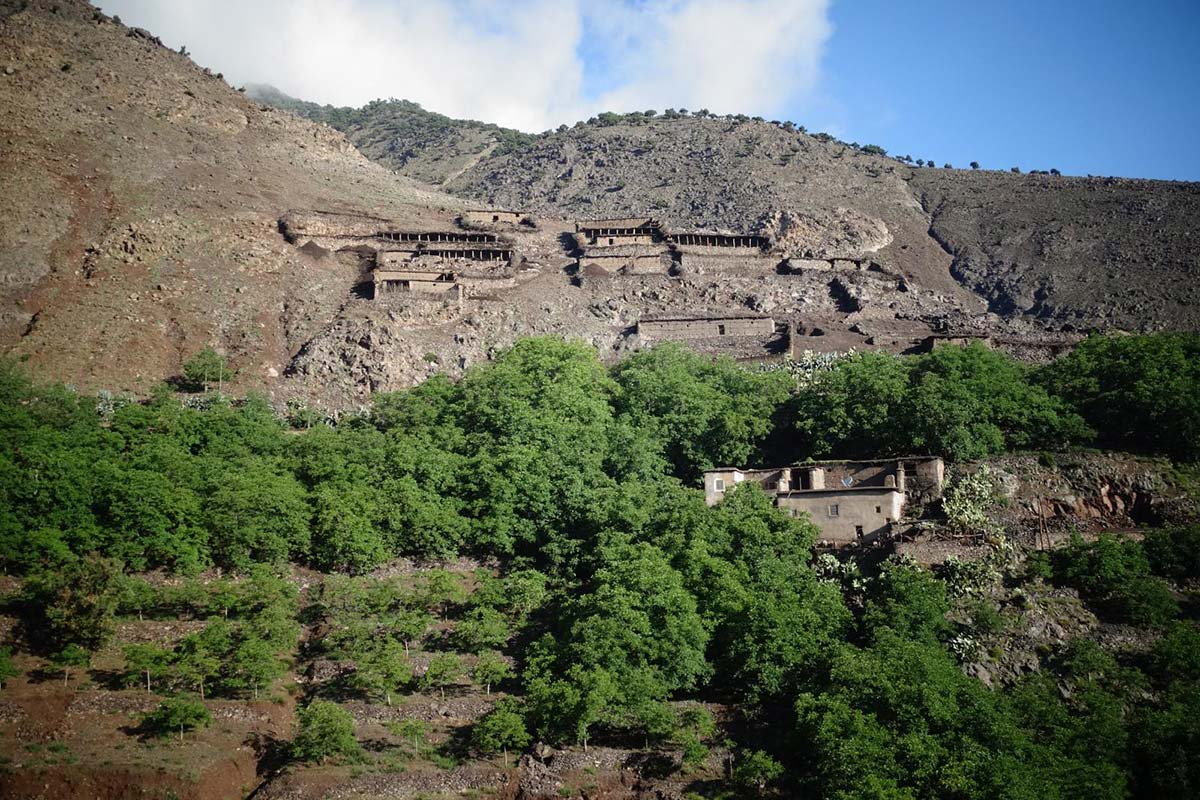
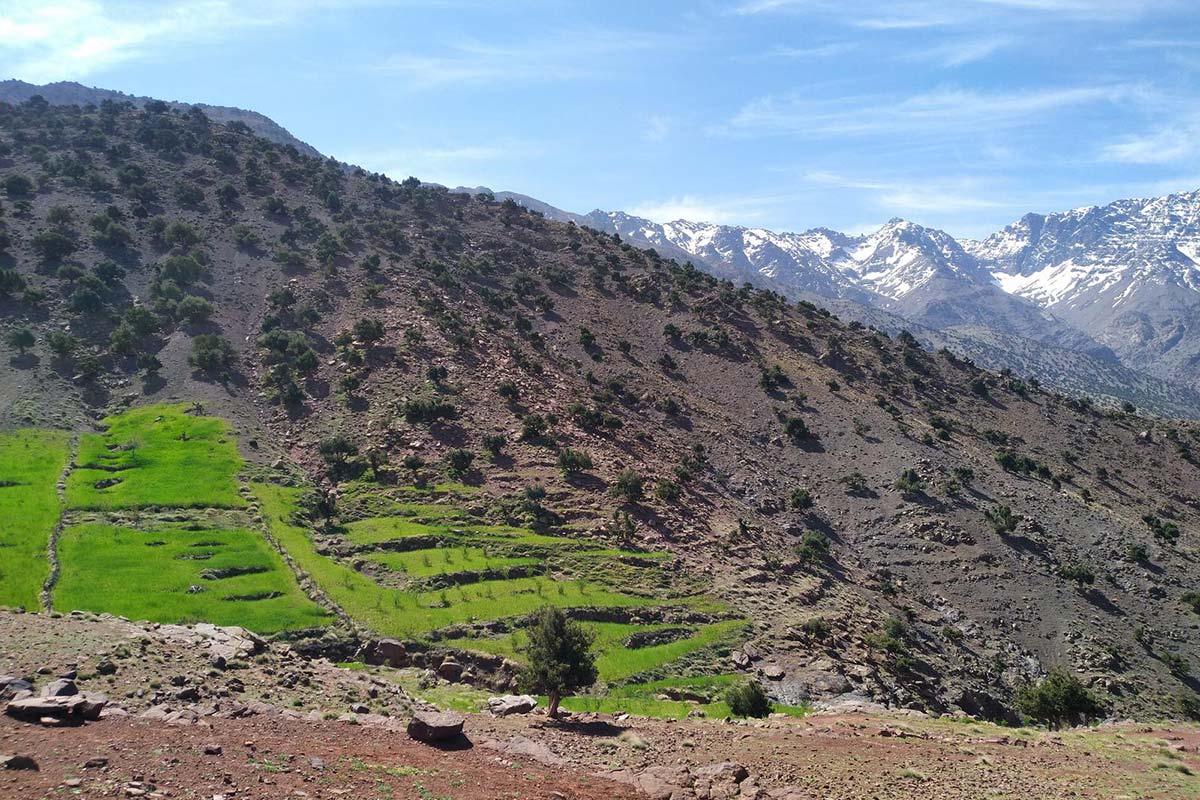
The Azzaden Valley (also spelled Azzadene) is a lush, relatively remote valley running parallel to the Imlil (Ait Mizane) Valley on the western flank of the Toubkal massif. While the standard Toubkal route follows the crowded Ait Mizane Valley directly from Imlil to the refuge, the Azzaden route loops west through this hidden valley — passing the Ighouliden Waterfalls, traditional Berber villages, and juniper forests — before crossing the Aguelzim Pass (3,560 m) to rejoin the Toubkal Refuge. It is the approach route on our 3-day Toubkal via Azzaden trek.
Quick Facts
| Aguelzim Pass | 3,560 m |
| Imlil to Azib Tamsoult | 5–6 h |
| Tamsoult to Refuge | 5–6 h |
| Best season | May–Oct |
| Route tag | Scenic |
Why Choose the Azzaden Route?
The standard Toubkal trail (Imlil → Sidi Chamharouch → Refuge) is well-trodden, efficient, and — frankly — crowded. The Azzaden route adds one day to your trek but delivers a completely different mountain experience. Here’s why we recommend it:
What the Azzaden Route Gives You
- Far fewer trekkers — while the standard trail sees 50–100+ trekkers per day in peak season, the Azzaden route may see 5–10. You’ll feel like you have the mountains to yourself
- The Ighouliden Waterfalls — one of the highest cascades in the Atlas (100+ m). Not visible from the standard route
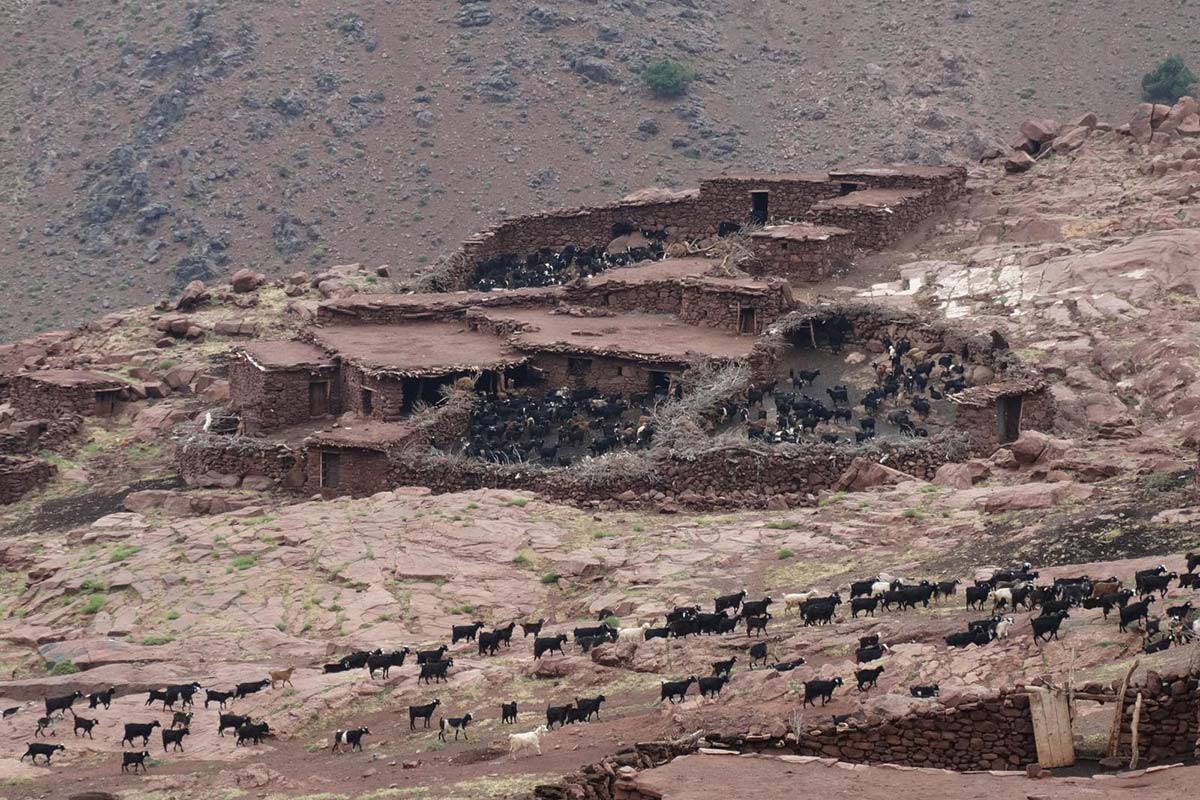
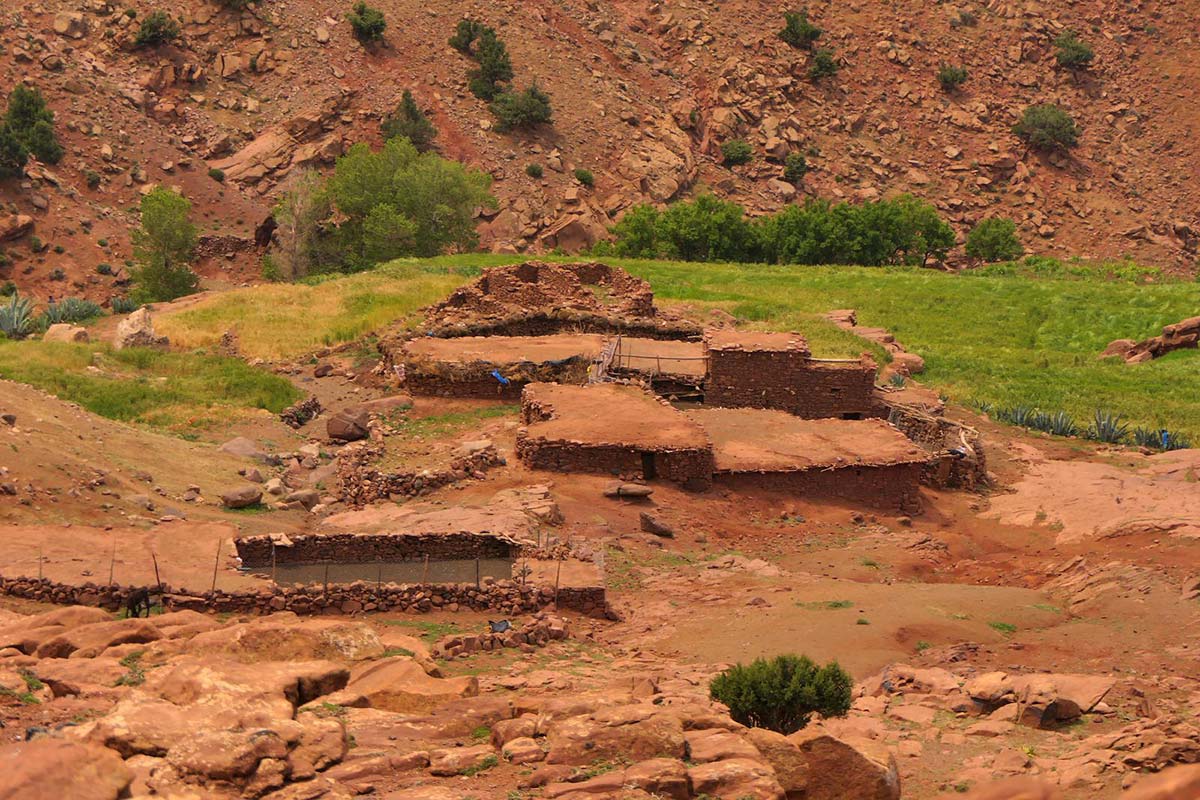
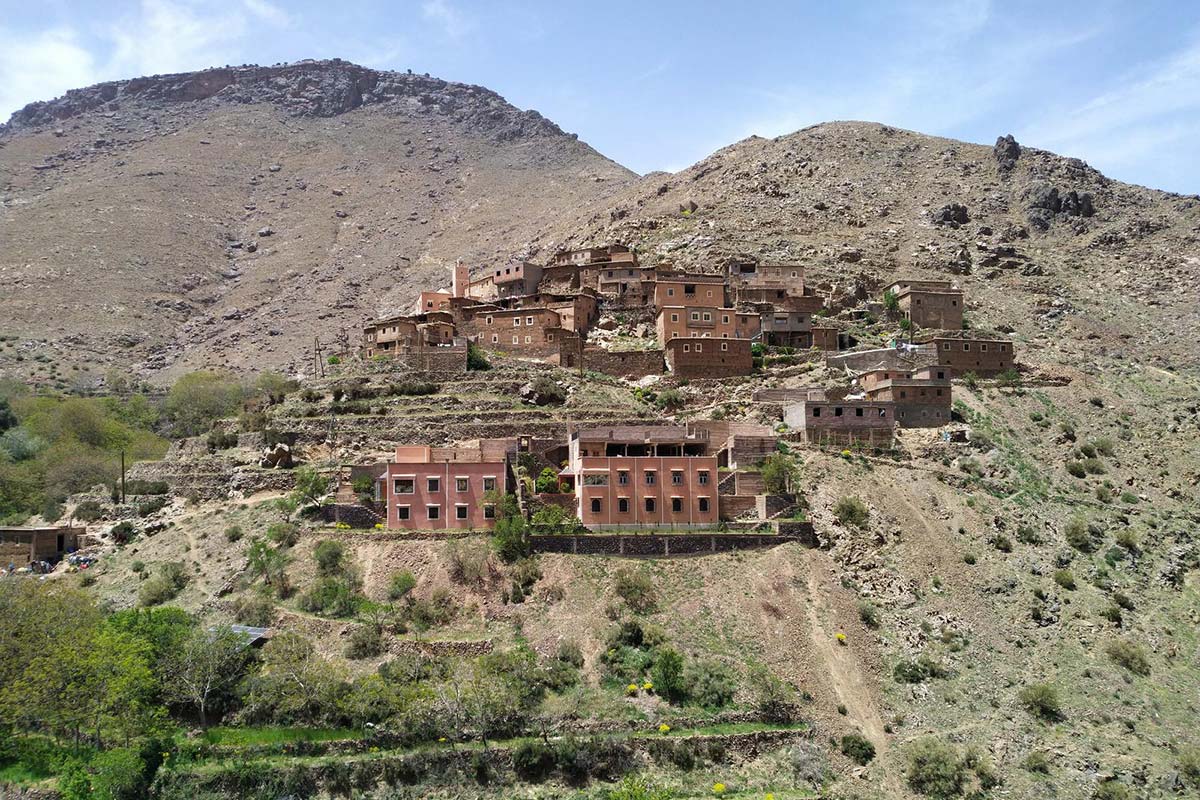
- Authentic Berber villages — Tizi Oussem, Azib Tamsoult, and smaller hamlets where tourism hasn’t changed daily life. Your guide bridges the language gap for genuine cultural encounters
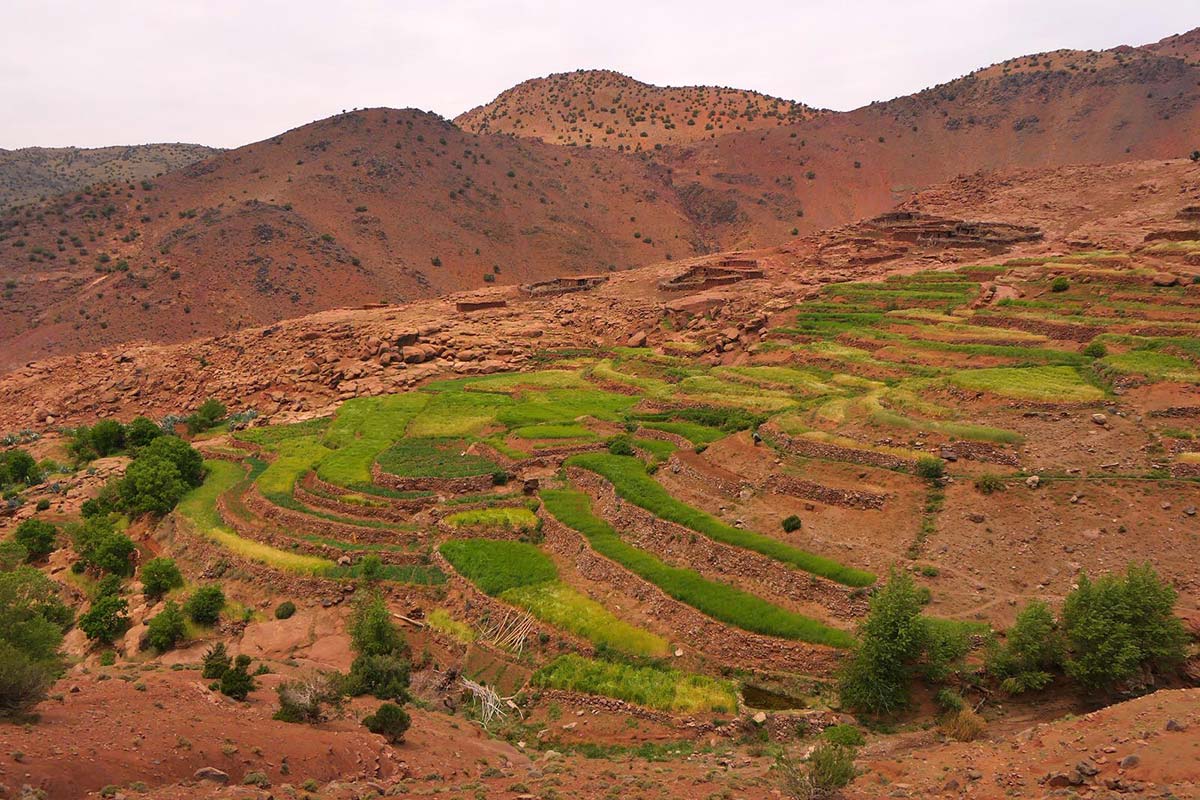
- Varied landscapes — juniper and pine forests, walnut groves, river valleys, high-altitude rocky passes. The standard route is essentially a single river valley
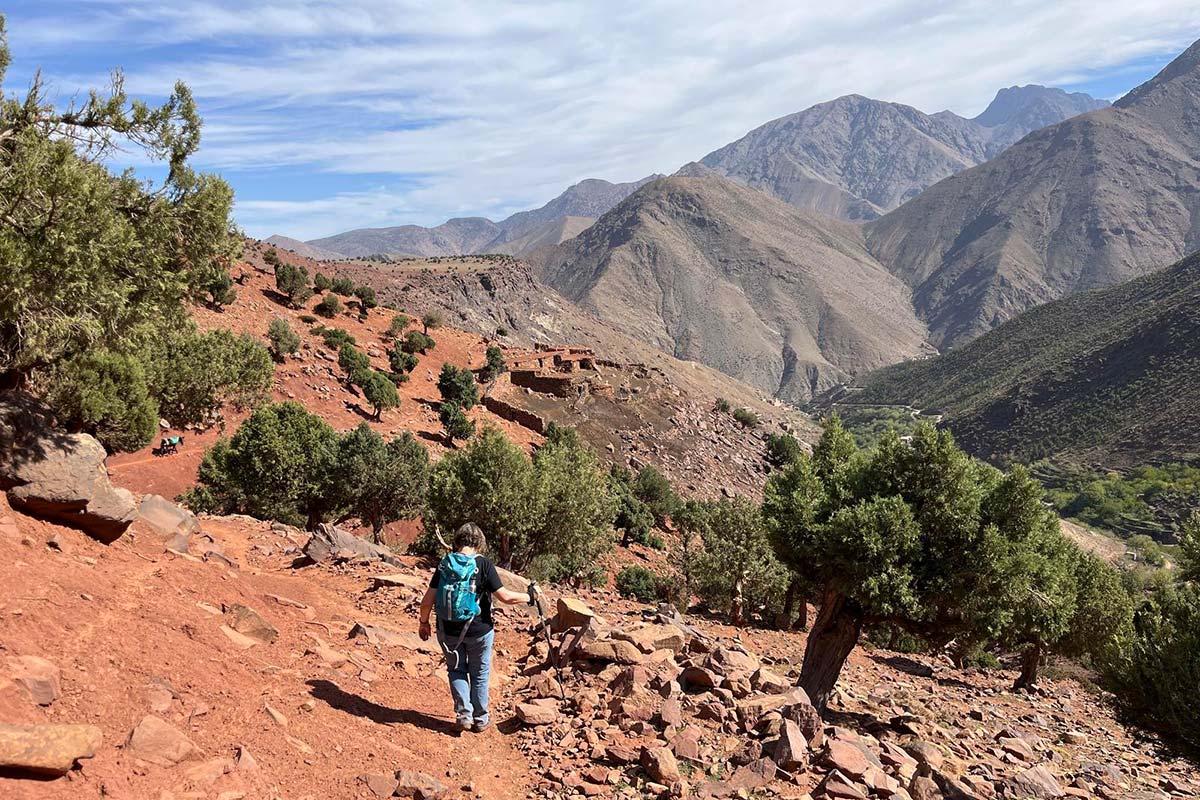
- The Aguelzim Pass (3,560 m) — a dramatic mountain crossing with panoramic views of the entire Toubkal massif. This pass also provides natural acclimatization — you reach 3,560 m before descending to the refuge at 3,207 m, giving your body a head start
- The 82-zigzag descent — the famous zigzag path from the Aguelzim Pass down to the refuge, with views opening up at every turn
The Route — Day by Day
The Azzaden approach is used on our 3-day Toubkal via Azzaden trek. Here’s what each day looks like:
Day 1: Imlil → Tizi Mzik → Azzaden Valley → Azib Tamsoult (5–6 hours)
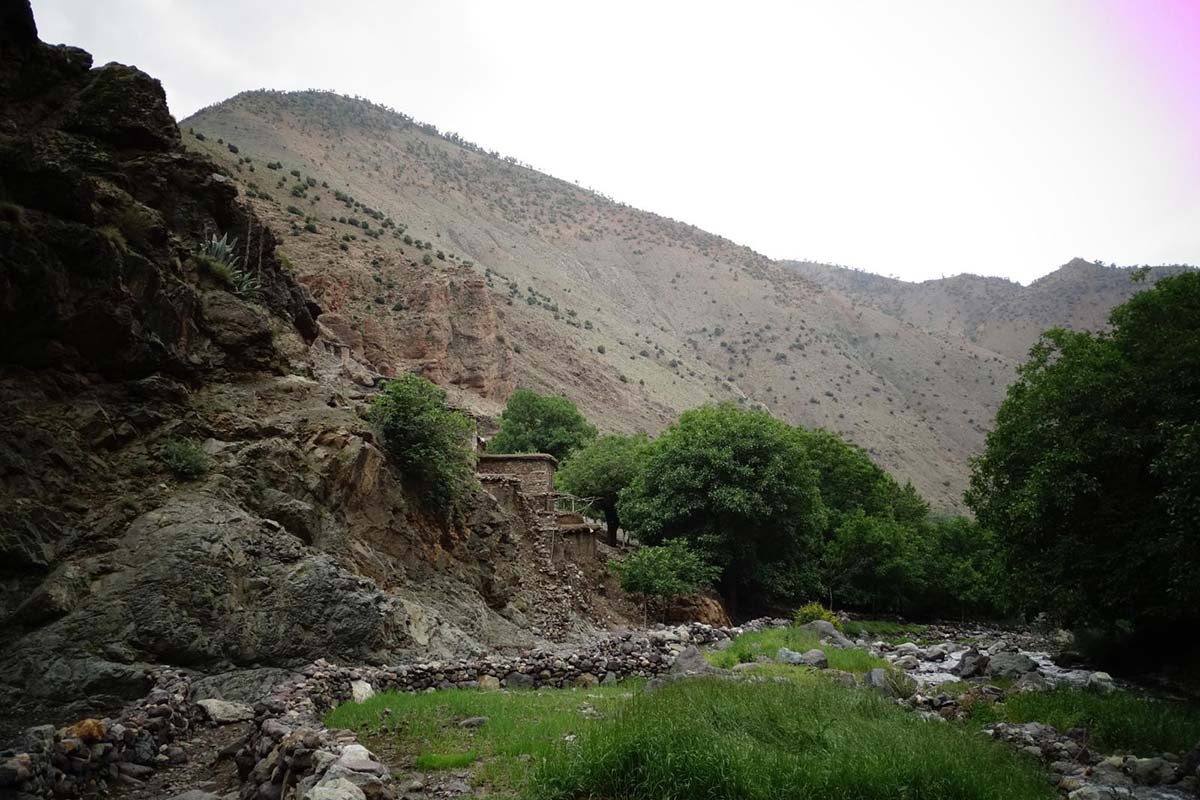
From Imlil (1,740 m), the trail heads west — the opposite direction from the standard Toubkal route. You climb through almond and walnut groves to the Tizi Mzik pass (2,489 m), which offers the first panoramic views across the Azzaden Valley and back toward the Imlil Valley. The descent takes you through juniper forests and past the spectacular Ighouliden Waterfalls before arriving at Azib Tamsoult, a shepherds’ camp at approximately 2,200 m. Overnight in the Lépiney Refuge or camping.
Day 2: Azib Tamsoult → Aguelzim Pass (3,560 m) → Toubkal Refuge (5–6 hours)
The day begins with the famous ascent — a steep, zigzagging scree path (the “82 zigzags”) climbing 1,360 m from the valley floor to the Aguelzim Pass (3,560 m). This is the hardest section of the entire trek, but the reward at the top is one of the finest viewpoints in the Atlas: the entire Toubkal massif laid out before you, with the refuge visible below. The descent from the pass to the Toubkal Refuge (3,207 m) takes 1–1.5 hours. Evening at the refuge, preparing for the summit the next morning.
Day 3: Refuge → Toubkal Summit (4,167 m) → Imlil (10–12 hours)
Pre-dawn departure (4:30–5:30 am) for the summit push. The route from the refuge to the Toubkal summit is the same as the standard route — 960 m of gain over loose scree and boulders, reaching the summit in 3–4 hours. After summit photos and views, descend back to the refuge, collect your gear, and continue all the way down the standard Ait Mizane Valley trail to Imlil. Transfer back to Marrakech in the afternoon.
Acclimatization advantage: Crossing the Aguelzim Pass at 3,560 m on Day 2 provides natural altitude preparation before arriving at the refuge. You’ve already been 350+ m above the refuge altitude before sleeping there. This is a real acclimatization benefit over the standard 2-day route, where you go directly from Imlil (1,740 m) to the refuge (3,207 m) without any higher exposure.
When to Trek the Azzaden Route
The Azzaden route is a seasonal trek — available May to October. The Aguelzim Pass (3,560 m) is snowbound in winter (November–April) and potentially dangerous without full alpine equipment. If you want a Toubkal trek in winter, use the standard 2-day route or the 4-day route with Ouanoukrim acclimatization.
Best months for the Azzaden Valley: September–October (autumn colors in the walnut groves, warm days, cool nights, minimal crowds) and May–June (wildflowers, green valleys, waterfalls at full flow after snowmelt). July–August is hot in the lower valley sections but fine at altitude. For month-by-month conditions, read: Best Time to Trek in the Atlas Mountains.
Azzaden Route vs. Standard Route
For a full comparison of all Toubkal routes, read: Imlil to Toubkal — Which Route Should You Choose?
Choose the Azzaden Route If:
- You want scenery and cultural immersion over speed
- You have 3 days available (vs. 2 for the standard route)
- You’re trekking May–October (not available in winter)
- You want to avoid the crowded standard trail
- You want natural acclimatization via the Aguelzim Pass before the summit
Choose the Standard Route If:
- You have only 2 days available
- You’re trekking in winter (the Azzaden route is snowbound)
- You want the most direct path to the summit
- You prefer to combine with the Ouanoukrim acclimatization on the 4-day route
Frequently Asked Questions (FAQ)
The Aguelzim Pass ascent (the “82 zigzags”) is the most physically demanding section — steeper and longer than any single section on the standard route. However, the overall effort is spread over 3 days instead of 2, so the daily load is more manageable. The standard route’s Day 2 (refuge to summit to Imlil) is extremely long.
Generally no — the Aguelzim Pass (3,560 m) is snowbound November to April and potentially dangerous. Winter Toubkal ascents use the standard route. See our winter Toubkal guide.
Night 1: Lépiney Refuge or camping near Azib Tamsoult (~2,200 m). Night 2: Toubkal Refuge (3,207 m). On Imlil Trek tours, all accommodation is arranged — you just trek.
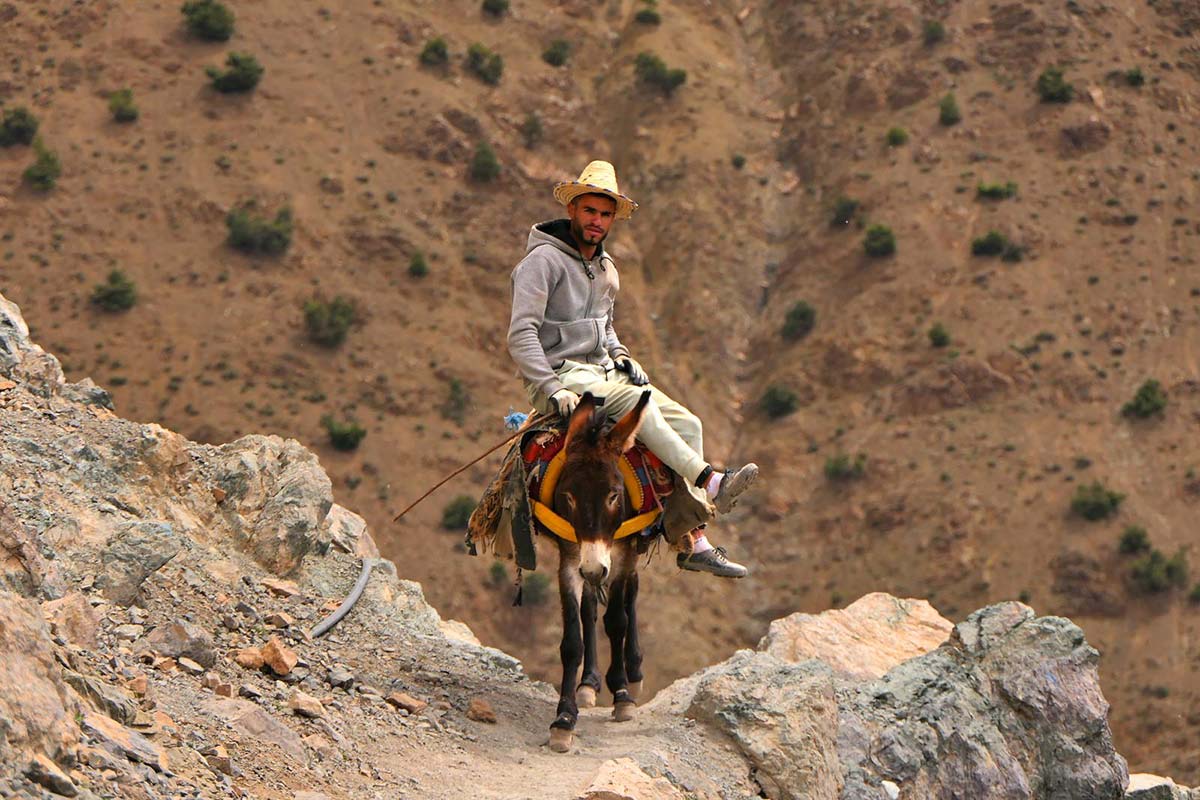
Yes — mules carry your main luggage on the entire route, including through the Azzaden Valley and up to the Aguelzim Pass. You carry only your daypack. Mules are included on all Imlil Trek tours.
Better than the 2-day standard route — you cross the Aguelzim Pass (3,560 m) before descending to the refuge (3,207 m), giving your body exposure above refuge altitude. For the best acclimatization, the 4-day route with Ouanoukrim is still superior (it takes you to 4,089 m).
Yes — the Azzaden Valley is a beautiful destination in its own right. A 2-day Imlil → Tizi Mzik → Azzaden Valley → Tizi Oussem → Imlil loop is one of the finest valley treks in the Atlas, without going above 2,500 m. Contact us for a custom itinerary.
Much quieter than the standard trail. In peak season (July–August), you might see 5–10 trekkers per day on the Azzaden route vs. 50–100+ on the standard trail. In September–October, you may have the valley entirely to yourself.
Late October to mid-November — the walnut groves turn gold and the contrast with the rocky peaks is spectacular. This is the most photogenic time to trek the Azzaden Valley. For the best conditions month by month, read: Best Time to Trek in the Atlas Mountains.
Continue Reading
- Mount Toubkal Climbing Guide (2026)
- Imlil to Toubkal — Which Route Should You Choose?
- Toubkal Refuge — What to Expect at Base Camp
- Ouanoukrim — Morocco’s Second Highest Peak
- Berber Villages in the Atlas Mountains
- Best Time to Trek in the Atlas Mountains
- What to Pack for an Atlas Trek
- Imlil Travel Guide
Take the Road Less Traveled
The Azzaden route adds one day and transforms the entire Toubkal experience — waterfalls, walnut groves, Berber villages, and a mountain pass that rivals the summit itself.
