

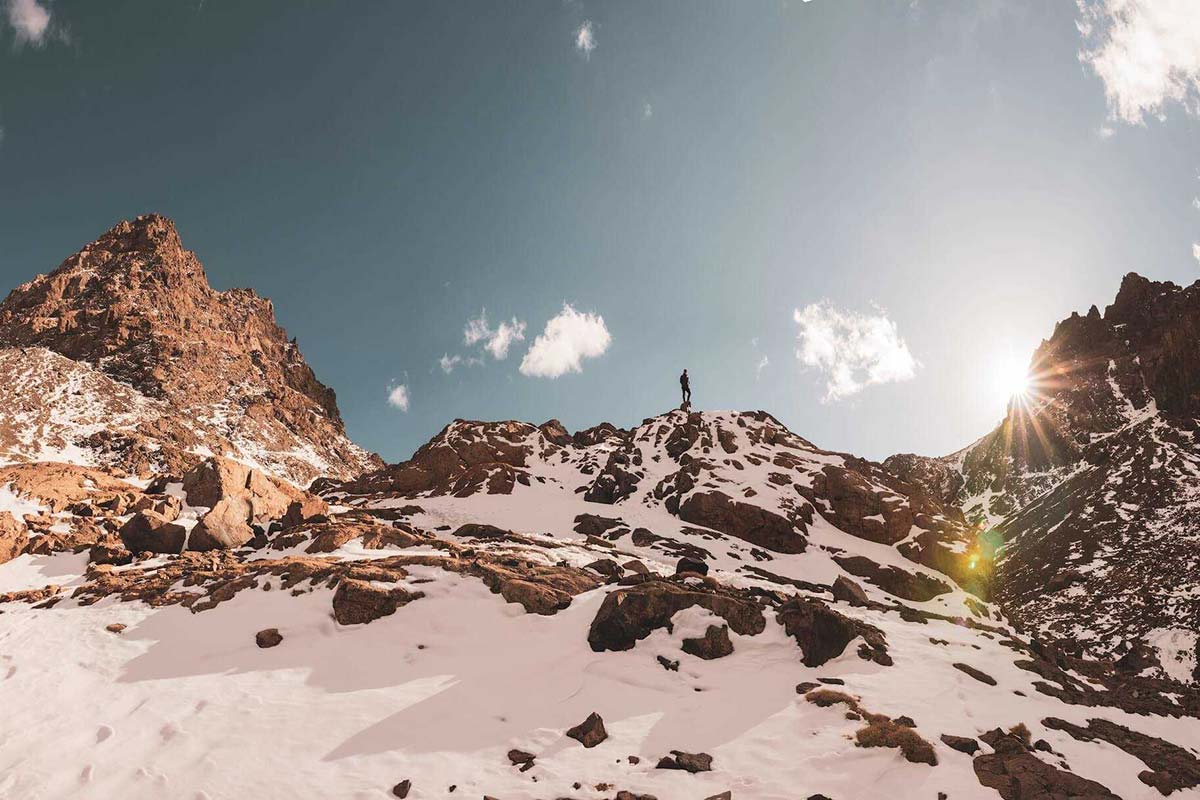
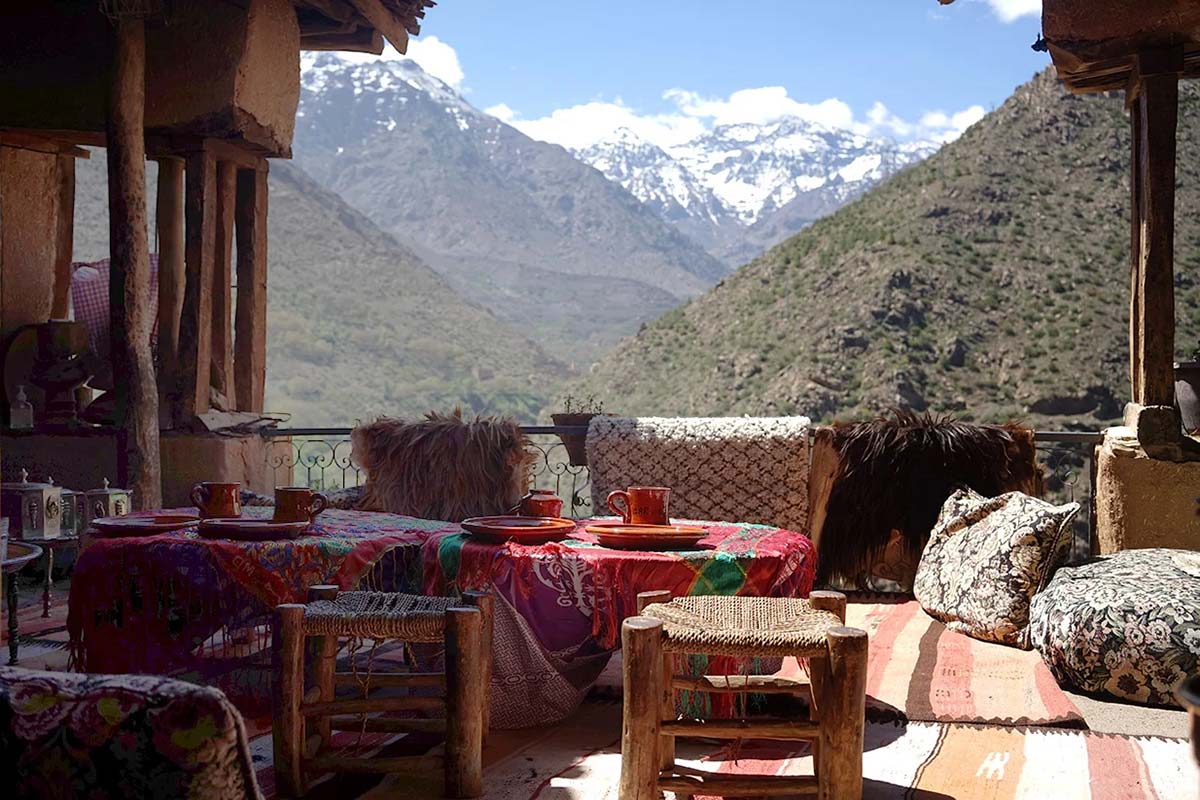
Winter in the Atlas (November–April) transforms the mountains into two distinct worlds. Above 2,500–3,000 m: snow, ice, sub-zero temperatures, and an alpine environment requiring crampons, ice axes, and winter-experienced guides. Below 2,500 m: warm sunny days (15–20°C), cold clear nights, snow-free trails, and some of the most peaceful trekking in Morocco. The key to a great winter Atlas experience is knowing which world you want — and planning accordingly.
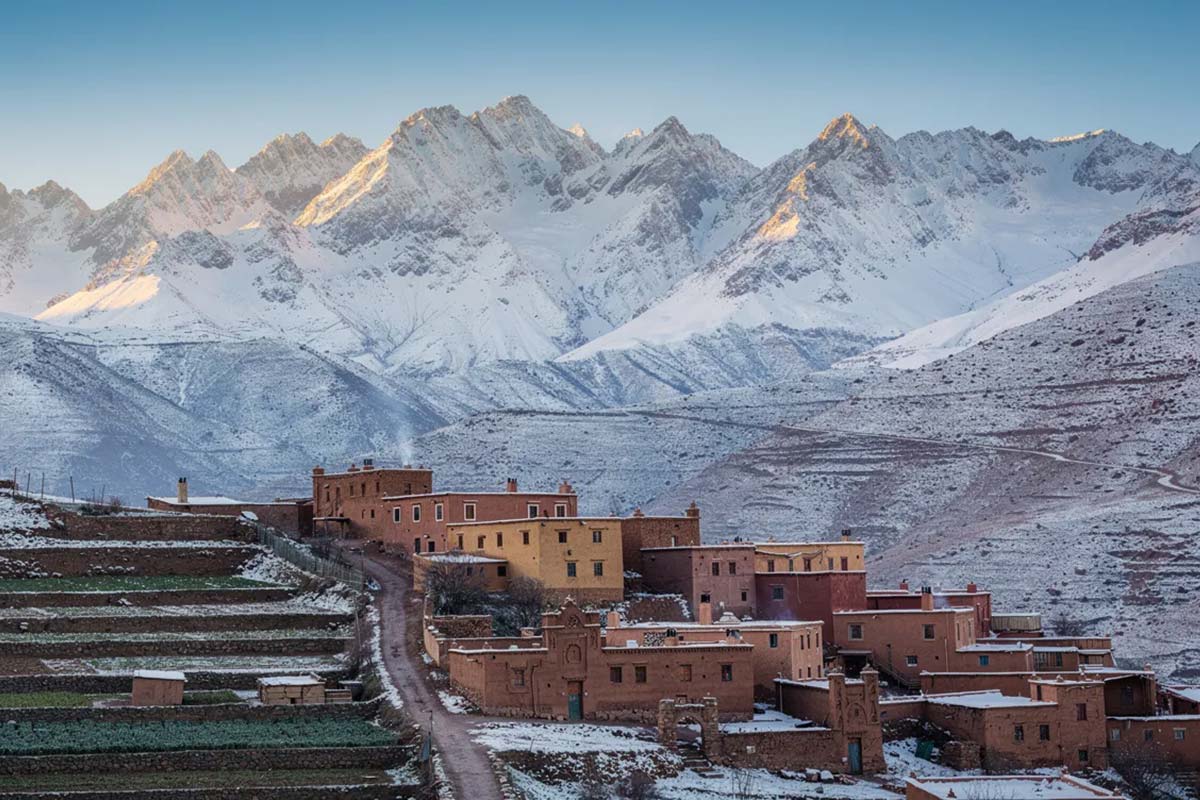
Winter Conditions — Month by Month
November — Transition Month
First snowfall on summits above 3,500 m (sometimes earlier). Lower trails still warm and hikeable. Passes like the Aguelzim (3,560 m) may close by late November. Daytime temperatures: 10–18°C at Imlil (1,740 m), −5°C to 5°C above 3,500 m.
December–January — Deep Winter
Permanent snow cover above 2,500–3,000 m. Summit temperatures: −10°C to −20°C with wind chill. The Toubkal Refuge is often snow-surrounded. Lower valleys remain sunny and mild (12–18°C daytime) but nights drop near freezing. This is the quietest period on the trails — you may have the mountains to yourself.
February–March — Late Winter / Early Spring
Snow still heavy above 3,000 m. Avalanche risk can be elevated on steeper slopes. Lower valleys start to warm. Late March sees wildflowers emerging below 2,000 m while summits remain fully alpine. Walnut and almond trees begin to blossom in the Azzaden and Imlil valleys.
April — Spring Transition
Snow recedes to above 3,500 m. The Azzaden route typically reopens (Aguelzim Pass clears). Lower trails are at their greenest and most photogenic. Summit routes still require crampons in most years. For the full year-round breakdown, read: Best Time to Trek in the Atlas Mountains.
Your Two Winter Options
Option 1: Alpine Summit Treks (Above the Snow Line)
For trekkers with mountain experience who want the full alpine winter experience:
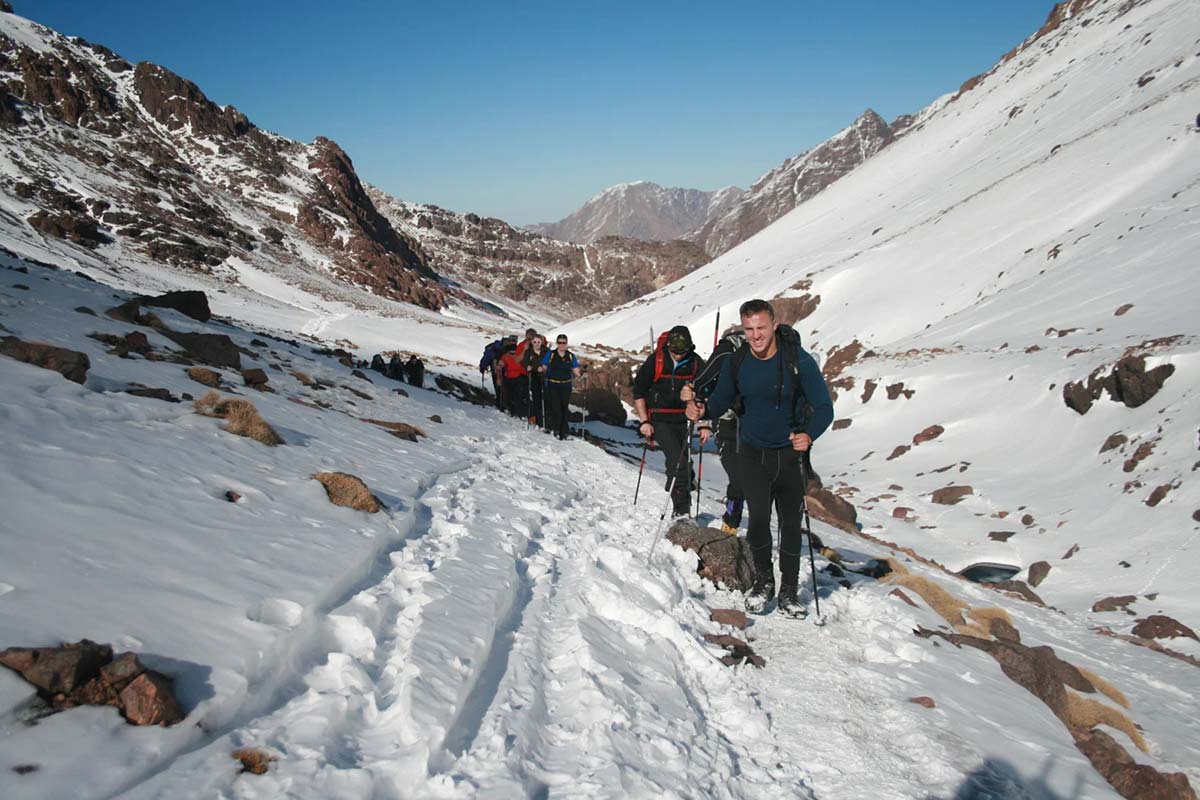
- 2-Day Winter Toubkal — the standard route via Sidi Chamharouch. Crampons and ice axes mandatory above 3,000 m. Porters replace mules above the snow line
- 4-Day Winter Toubkal with Ouanoukrim — acclimatization on Ouanoukrim (4,089 m) before the summit. Our recommended winter route for the best balance of safety and experience
Requirements: Prior experience with crampons and ice axes. Good cardiovascular fitness. Cold-weather gear (down jacket, thermal layers, insulated gloves, gaiters). Travel insurance covering high-altitude winter trekking. Full details: Toubkal in Winter — What You Need to Know.
Option 2: Snow-Free Valley Treks (Below the Snow Line)
For trekkers who want the winter Atlas without the alpine conditions — warm days, cold nights, empty trails:
- 2-Day Atlas Valleys Trek — Ait Mizane and Imenane valleys, Berber village guesthouses. Stays below 2,500 m, snow-free all winter
- 3 Valleys 3-Day Trek — Imenane, lower Azzaden, and Imlil valleys. Maximum cultural immersion, minimal altitude. Snow-free November–April
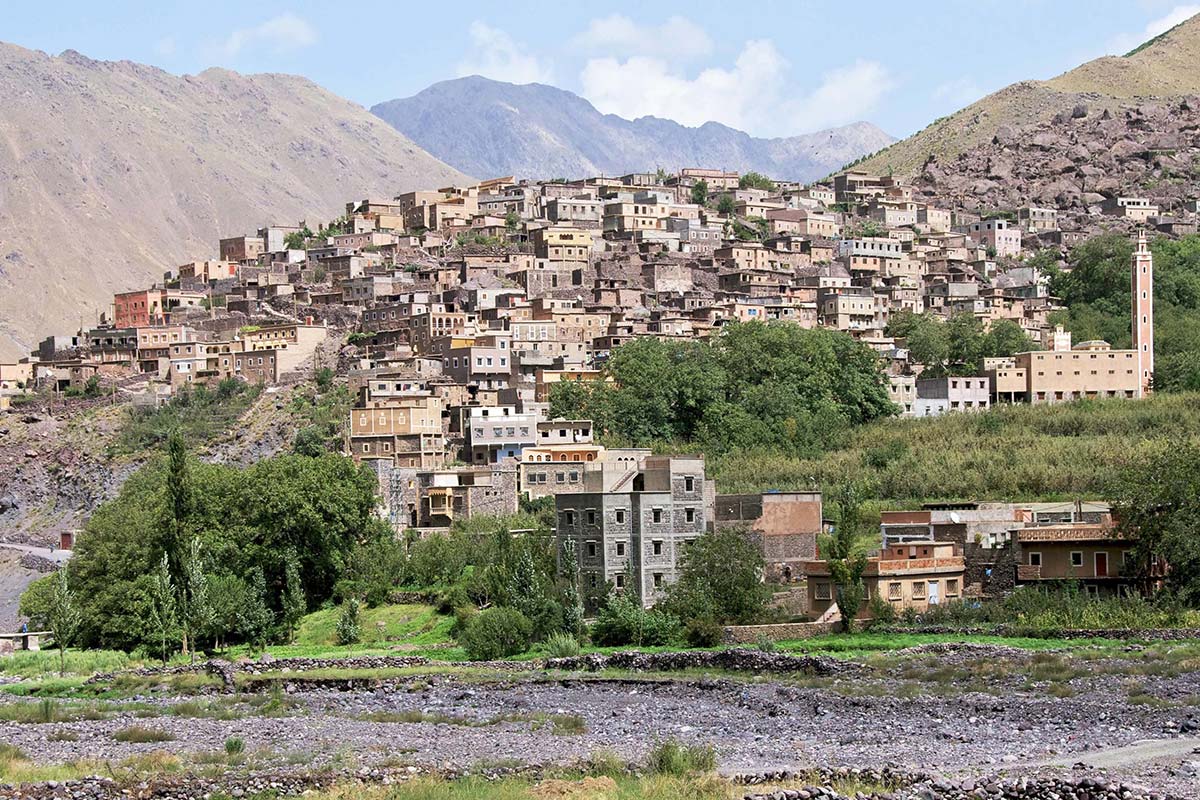
The secret of winter valley trekking: While the summits are covered in snow, the valleys at 1,500–2,500 m enjoy warm sunny days (15–20°C), clear skies, and virtually no other trekkers. Berber villages are at their quietest and most authentic. This is the Atlas experience that almost no visitor knows about.
What Opens, What Closes in Winter
Open Year-Round
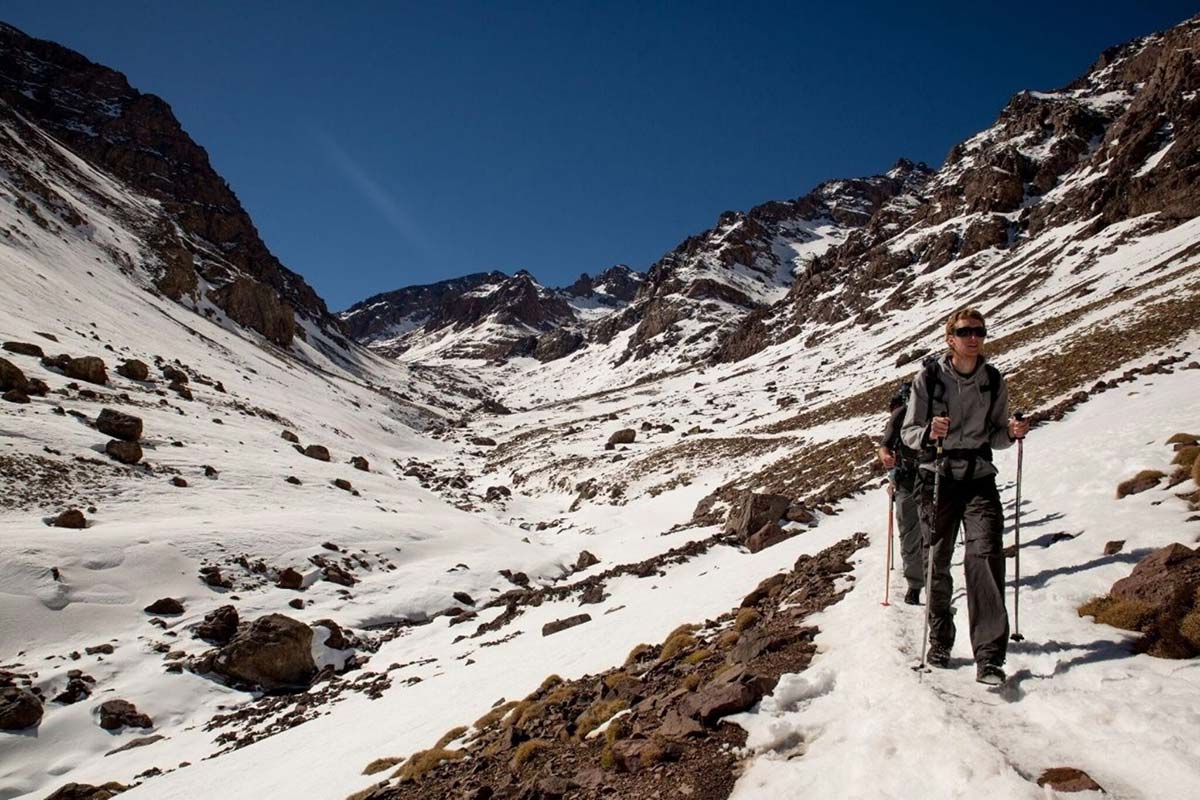
- Imlil–Sidi Chamharouch–Toubkal Refuge trail — always open (with crampons above snow line)
- Toubkal Refuge — open year-round, heated common room in winter
- Imlil village — fully operational: guesthouses, shops, equipment rental
- Valley trails below 2,500 m — Ait Mizane, Imenane, lower sections of Azzaden
- Marrakech–Imlil road (R203) — paved, rarely affected by snow
Closed or Restricted in Winter
- Aguelzim Pass (3,560 m) — snowbound November–April. The Azzaden route to Toubkal is not available in winter
- Tizi n’Tamaterte and high passes above 3,000 m — impassable without full alpine equipment
- Lake Ifni circuit — the Tizi n’Ouanoums pass (3,664 m) is snowbound. The 6-day circuit is a summer/autumn route
- Mule transport above snow line — mules cannot operate on snow. Porters carry equipment above the snow line (additional cost)
Equipment rental in winter: Crampons (~80 MAD/€8) and ice axes (~80 MAD/€8) are available for rental in Imlil. Inspect before renting — check crampon straps and ice axe condition. On Imlil Trek winter tours, we provide well-maintained rental equipment. For the full winter gear list, read: What to Pack for an Atlas Trek.
Frequently Asked Questions (FAQ)
Yes — the standard route (Imlil → Sidi Chamharouch → Refuge → Summit) is open year-round. Winter ascents require crampons, ice axes, and prior experience. The Azzaden route is not available in winter. Full details: Toubkal in Winter.
No — valley treks below 2,500 m (2-Day Atlas Valleys, 3 Valleys 3-Day) are snow-free all winter. Standard hiking boots and warm layers are sufficient.
At Imlil (1,740 m): daytime 12–18°C, night 0–5°C. At the refuge (3,207 m): daytime 0–5°C, night −10°C to −15°C. At the summit (4,167 m): −10°C to −20°C with wind chill. Valley treks are cold at night but warm during the day.
No — the Aguelzim Pass (3,560 m) is snowbound November to April. The lower Azzaden Valley (below Tizi Oussem, ~1,850 m) is accessible for valley treks, but the through-route to the refuge is closed.
One of the best. Tourist numbers are at their lowest, so village encounters feel more genuine and relaxed. Guesthouse evenings around a fire with mint tea are a highlight of winter valley treks.
Oukaïmeden (2,600 m), about 75 km from Marrakech, is Morocco’s only ski resort. Snow conditions are variable — the most reliable period is mid-January to mid-February. Facilities are basic compared to European resorts. It’s a novelty experience, not a destination ski holiday.
Significantly — winter is the quietest season. The standard Toubkal trail might see 5–15 trekkers per day (vs. 50–100+ in summer). Valley trails may see none. If solitude is what you’re after, winter delivers.
The R203 (Marrakech–Imlil) is paved and at low altitude — it’s rarely affected. The Tizi n’Tichka pass (2,260 m) on the Marrakech–Ouarzazate road can close temporarily during heavy snowfall, but this doesn’t affect the Imlil route.
Discover the Winter Atlas
Alpine summit or sunny valley — winter in the Atlas offers both. We guide both options year-round with CFAMM-certified local expertise.
